

ISLAMABAD (Digital Post) Pakistan PM calls economic reforms an example for the world

Share
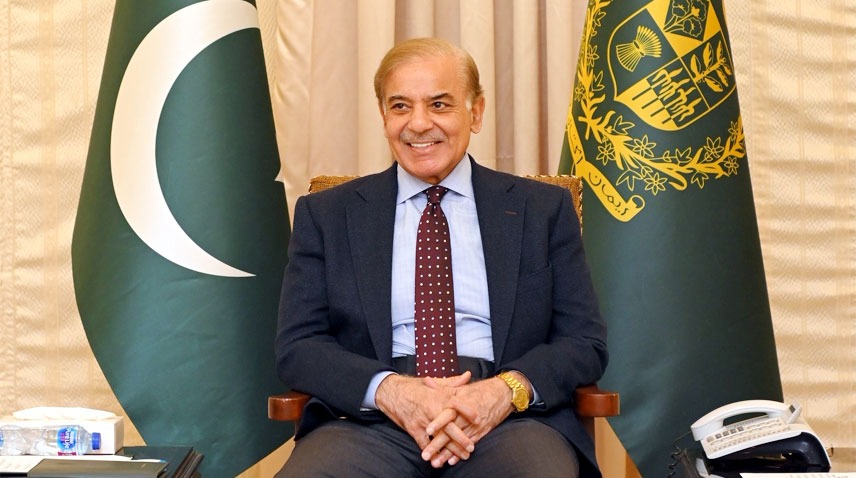
ISLAMABAD (Digital Post) Pakistan Prime Minister Shehbaz Sharif has called economic reforms an example for the world. The Prime Minister says that Pakistan’s economic reforms and digitization have become an example for the world as a successful case study. The Prime Minister expressed his firm determination to continue working until the prosperity of the Pakistani people and the country is completely free from external debt. The recent financial release by the International Monetary Fund is proof that Pakistan is implementing the necessary measures for economic stability and development. In a statement, he said that the IMF’s satisfaction over the effective implementation of economic reforms and measures in Pakistan is a testament to the hard work of Finance Minister Muhammad Aurangzeb and his team. The Prime Minister also acknowledged the key role of the Chief of Army Staff and Chief of Defense Forces Field Marshal Syed Asim Munir in implementing the reform agenda and paving the way for Pakistan’s economic development.
Prime Minister Shehbaz Sharif said that moving the country from the brink of default to the direction of stability and development was a difficult step for which everyone sacrificed together. Political parties made the impossible possible by sacrificing politics and the nation by enduring economic hardships.
Economic reforms in Pakistan have helped maintain economic stability, due to which the confidence of global economic institutions in Pakistan has increased. On which the International Monetary Fund, IMF, has transferred $1.2 billion to Pakistan.
 Pakistan’s economy is moving towards stability, due to which the ADB has predicted a growth rate of 2.5% for the fiscal year 2025. This stability is a result of strict macroeconomic policies and progress in economic reforms. The economy has remained stable since July 2023, inflation has ended, foreign exchange reserves have increased and the cover for imports has reached at least two and a half months.
According to the report, Pakistan’s economy is predicted to grow in 2026 due to improvement in industrial activities and expansion in the services sector.
Among the key factors for Pakistan’s economic stability is fair trade, which the teachings of the Prophet Muhammad (peace be upon him) emphasize on the importance of fair trade, which promotes trust and stability in the economy. This can help prevent a debt crisis by encouraging responsible borrowing and lending practices. Education is also key to developing a skilled workforce, which is essential for economic growth and development. These factors are important for Pakistan’s economic stability and can help in its growth and prosperity. The government has assured the IMF of further steps to maintain fiscal discipline, continue to implement economic reforms and keep inflation within the prescribed limits. According to sources, the budget for the next fiscal year will also be prepared in accordance with the IMF’s conditions. The government has also assured not to introduce any new amnesty scheme and to end tax exemptions. New tax measures are proposed to fully meet the tax revenue shortfall in the current fiscal year. There is an option of additional tax measures in the form of the proposed mini budget. Regular adjustments of electricity and gas prices will have to continue. It has also been assured of controlling circular debt, reducing losses in the energy sector, and the condition of imposing federal excise duty on fertilizers and agrochemicals remains. The government has also assured to amend the laws of government institutions next year. An action plan for corruption and governance reforms will also have to be published. The conditions for further reducing government intervention in the public sector and for the State Bank to strictly adhere to the fixed exchange rate remain. To keep inflation under control, a strict monetary policy has been maintained, while emphasis has been placed on increasing spending on social security, health and education. The latest details of economic indicators have also been released, according to which GDP growth is expected to increase from 3 to 3.2 percent. Unemployment will decrease from 8.3 percent to 7.5 percent. Average inflation is expected to increase from 4.5 percent to 6.3 percent. The budget deficit is estimated to decrease from 5.6 percent to 4 percent. Earlier, the IMF Executive Board approved an installment of $1.2 billion. One billion will be received from the EFF program, while $200 million will be received under the climate change framework. According to the IMF, Pakistan’s implementation of the loan program is commendable. As a result of policy measures, stability in the economy and investor confidence have been restored. The World Bank has appreciated the ‘remarkable economic stability’ achieved by Pakistan in fiscal year 2025. Due to strong revenue collection, the primary fiscal surplus has reached a historic level of 2.4 percent.
Record growth in remittances and a stable exchange rate resulted in the country achieving a current account surplus of 0.5 percent of GDP, the highest in two decades. The poverty rate fell from 25.3 percent to 22.2 percent in fiscal year 2025, driven by a growing construction and logistics sector and a sharp decline in food inflation.According to the report, Pakistan needs to move towards an export-led economy to emerge from the recurring ‘boom-bust cycle’. Pakistan has an untapped export potential of around $60 billion, which the country will have to double its export share of GDP to tap. The government has approved a five-year National Tariff Plan in the fiscal year 2026 budget to reduce the simple average tariff from 20.2 percent to 9.7 percent by 2030. These reforms are aimed at reducing input costs for exporters. However, high electricity prices for exporters and limited access to finance for the private sector due to government borrowing remain major constraints. The World Bank has called for the full functioning of the Export-Import Bank.
Recall that Federal Finance Minister Muhammad Aurangzeb says that Pakistan has achieved economic stability. Fiscal and energy reforms are underway after the IMF program, and the improvement in Pakistan’s exports has given a boost to IT services. Remittances from the Gulf countries are expected to be $18-20 billion annually, the country’s economic growth has decreased by 0.5 percent due to devastating floods. There are new opportunities in trade and technology in Pakistan, including increased partnership with Qatar in artificial intelligence and digital technologies. Addressing the Doha Forum, the Federal Finance Minister expressed his determination to strengthen cooperation with Qatar in the LNG, agriculture and textile sectors, while emphasizing climate investment. The Finance Minister said that the IMF’s $1.3 billion RSF program is to address climate risks. CPEC Phase II will promote business-to-business investment from infrastructure. Young freelancers can increase their income with blockchain, AI and digital skills, FTA with Qatar will further strengthen partnership in energy and artificial intelligence,
The IMF Executive Board, in its meeting held on December 8, 2025, completed the second review for Pakistan under the Extended Fund Facility (EFF) and approved an amount of SDR 760 million.
The State Bank of Pakistan has said that it has received about $1.2 billion from the International Monetary Fund (IMF) under the Extended Fund Facility (EFF) and the Resilience and Sustainability Facility (RSF).
In addition, the IMF Executive Board also approved the first tranche of SDR 154 million under the Resilience and Sustainability Facility (RSF).
According to which, the State Bank of Pakistan has received a total of 914 million SDRs (equivalent to approximately 1.2 billion US dollars) under the EFF and RSF, which were disbursed by the IMF on December 10, 2025. It has been further informed that this amount will be reflected in the State Bank’s foreign exchange reserves for the week ending December 12, 2025. It may be noted that the IMF Executive Board had approved an amount of $1.2 billion for Pakistan under the EFF and RSF .Following the Executive Board meeting, Deputy Managing Director Nigel Clarke issued a statement saying that Pakistan’s reforms under the EFF have helped maintain macroeconomic stability despite several recent shocks.
Real GDP growth accelerated, inflation expectations remained stable, and fiscal and external imbalances improved. Despite the uncertain global environment, Pakistan will need to maintain a prudent policy stance to further strengthen macroeconomic stability, and accelerate the reforms that are necessary for strong, private-sector-led, and sustainable medium-term growth.
An IMF team led by Eva Petrova held discussions for the second review of the EFF and the first review of the RSF in Karachi, Islamabad, and Washington, D.C., from September 24 to October 8, 2025.
After the World Bank, the Asian Development Bank, ADB has also approved loans for Pakistan. ADB has approved two projects worth $540 million for Pakistan, while the World Bank has approved financing of $400 million for Pakistan. ADB has approved two projects worth a total of $540 million for Pakistan, including a results-based loan program and a major environmental protection project in Sindh. The statement said that the $400 million results-based loan program will focus on improving the governance and performance of government institutions. This program also includes the restructuring and commercialization of the National Highway Authority (NHA). ADB says that significant progress has been made in the reforms of State-Owned Enterprises (SOEs) in the last five years, while the implementation of the SOEs Act and policy in 2023 was an important milestone. According to the bank, technical assistance of $750,000 will also be provided for the implementation of the reform process. It has been reported that $140 million has been approved for the Sindh Coastal Resilience Sector Project, which will directly benefit 500,000 people. Under the project, 150,000 hectares of agricultural land will be protected from flood risks and a target of 22,000 hectares of forest restoration has also been set. This project will play an important role in food security, biodiversity and overall environmental improvement. The project will also be co-financed through a $20 million grant from the Green Climate Fund and a $20 million concessional loan. The World Bank has approved a $400 million loan for Pakistan. According to the announcement, the money will be spent on water, sanitation and basic hygiene projects in cities in Punjab province for sanitation and water facilities. This program will be launched in 16 cities of Punjab. The program will help in the improvement and rehabilitation of sewage systems, water treatment plants.
The Asian Development Bank (ADB) has approved a $410 million package for Pakistan’s Reko Diq project. The proposed open pit project in Balochistan is an attempt to exploit the world’s largest untapped copper and gold reserves, which are expected to start production in 2028. The ADB package includes a $300 million loan to Canadian company Barrick and a guarantee of up to $110 million for the local government. Reko Diq is projected to become the world’s fifth-largest copper mine upon completion. Copper is a metal that is essential for wiring, motors and renewable energy technology. The ADB said that ‘Reko Diq will support the supply chain of key minerals, advance the transition to clean energy and promote digital innovation.’ The package was described as a ‘game changer’ for Pakistan, saying that the move would ‘help the country move towards a stronger and more diversified economy.’ Pakistani authorities have been trying to build a strong and diversified economy for decades. The Reko Diq project has been described as a milestone in the country’s economic recovery strategy. According to the World Bank, the project will reduce health costs and reduce water-borne diseases, will also help increase the capacity and revenue of local governments, the project will make cities more resilient to floods and droughts, and will also contribute to the goals of sustainable development and environmental friendliness of cities. It has been reported that the project will prioritize new recruitments for women and representation in decision-making, skill development and gender complaint desks will be established for women, and awareness campaigns for better sanitation and health at the household level are part of the project.According to the World Bank, the goal is to mobilize private sector investment in the water and sanitation sector. The project will support the Punjab Development Program and the Clean Punjab Program, laying the foundation for healthy communities and a prosperous Pakistan.
Earlier, the World Bank cut Pakistan’s growth forecast for the current fiscal year by 0.5 percentage points to 2.6 percent, the World Bank said, citing the recent devastating floods, which are also likely to push inflation to 7.2 percent. The Washington-based financial institution, in its economic report for the Middle East, North Africa, Afghanistan and Pakistan (MENAAP) region, said that real GDP growth for the fiscal year 2025-26 is likely to be around 2.6 percent, as the ongoing devastating floods have affected the economic projections. The World Bank had earlier pegged Pakistan’s growth rate at 3.1 percent in its April 2025 biennial report. Pakistan itself had set a target of 4.2 percent and later reduced it to 3.5 percent as a result of negotiations with the IMF. Initial estimates show that agricultural production in Punjab is at least A 10 percent decline is expected, which will affect key crops such as rice, sugarcane, cotton, wheat and maize. The growth rate is expected to increase to 3.4 percent in the fiscal year 2026-27, due to higher agricultural production, lower inflation and interest rates, restored consumer and business confidence, and increased private consumption and investment. Pakistan, which has historically maintained high import tariffs with a complex structure, can benefit from a halving of tariffs under the recently approved 5-year reform plan (2025-2030) in terms of exports and growth. According to the report, inflation in Pakistan fell to single digits (i.e. less than 10 percent) in the fiscal year 2024-25, as the pace of food and energy price increases slowed, however, ongoing floods are expected to disrupt the food supply chain, which could lead to a resurgence in inflation by 2027. It also estimated a decline of about 1.5 percent in global exports. The poverty rate in Pakistan fell by 9.4 percentage points between 2011 and 2018, the latest estimate available, but a combination of economic shocks and natural disasters since 2020 has halted this downward trend. High poverty rates and a large population make Pakistan one of the poorest countries in the MENAAP region. The report projects that the region’s economy will improve overall, with growth projected to reach 2.8 percent in 2025 and 3.3 percent in 2026. However, global uncertainty, changes in trade policy, and ongoing conflicts and displacement pose risks. Gulf Cooperation Council (GCC) countries are expected to benefit from the end of voluntary cuts in oil production and the development of non-oil industries, while oil-importing countries are also expected to improve from private investment, agriculture, and tourism. However, developing oil-exporting countries Conflict and productivity declines could slow the pace of economic growth, the report said, adding that millions of lives could be improved if countries in the region ensured the full participation of women in their workforces, as women’s skills and abilities are still underutilized. The region’s labor force participation rate is among the lowest in the world, with only one in five women in the region participating, despite significant improvements in women’s education and skills. Roberta Gatti, the region’s chief economist, said that increasing women’s labor force participation could bring significant economic benefits, with countries such as Egypt, Jordan and Pakistan seeing a 20-30 percent increase in GDP per capita by removing barriers to women’s employment.
The region’s working-age population is expected to grow by more than 220 million by 2050, an increase of about 40 percent, the second-largest increase in the world, according to the report. At the same time, the region is heading towards a demographic crisis due to declining fertility rates and an aging population. Pakistan has one of the highest fertility rates in the region at 3.5 percent, but its demographic transition is similar to other countries, with only a slight delay.
Its fertility rate is expected to fall below replacement levels within a generation, the report also said, adding that Pakistan has not yet reached a level in female participation rates comparable to other countries in the region (where there is no conflict).
Over the past 25 years, countries such as Saudi Arabia, Pakistan, Tunisia and Algeria have made significant progress in terms of female labor force participation, although the rate is still low compared to peer countries. In particular, in Saudi Arabia, the female participation rate increased by almost 14 percentage points between 2017 and 2023, while in Pakistan, the rate increased by 8 percentage points between 2000 and 2021. Two-thirds of college-educated women in Pakistan are out of the workforce, although their professional aspirations and job application rates are on par with men, especially as marriage offers increase immediately after women graduate, limiting the time to search for a job.It was further stated that since 2010, especially in the area of workplace and wages, the UAE (19 positive reforms), Saudi Arabia (18), Bahrain (12), Jordan (10), and Pakistan (8) are the prominent reformers in the region. According to the World Bank report, under the new standard, 44.7 percent of Pakistan’s population is living in poverty, while under the old scale, the poverty rate was 39.8 percent. According to the new method, 107.9 million Pakistanis are living in poverty, the standard has changed, there has been no immediate change in people’s lives. According to the new World Bank review report, in lower middle-income countries including Pakistan, those earning less than $4.20 per day are below the poverty line, before that the poverty line was $3.65 per day. According to the report, 44.7 percent of Pakistan’s population falls under this income range. The World Bank has set a new extreme poverty line in Pakistan at $3 per capita per day, which covers 16.5 percent of Pakistan’s population. According to the new scale, the income threshold for testing poverty in upper-middle-income countries has been increased from $6.85 to $8.30 per day, according to which 88.4 percent of Pakistan’s population is below this line. A report by the United Nations Development Programme (UNDP) has said that more than one billion people worldwide are living in extreme poverty, including more than half of children. According to the report, a paper released in collaboration with the Oxford Poverty and Human Development Initiative (OPHI) has pointed out that the poverty rate is three times higher in war-torn countries, as 2023 witnessed the highest number of conflicts worldwide since World War II. UNDP and OPHI have been releasing their annual Multidimensional Poverty Index (MPI) since 2010, which includes data from 112 countries with a population of 6.3 billion. The poverty index covers factors such as lack of adequate housing, sanitation, electricity, cooking fuel, nutrition and school attendance. The World Bank has said that natural disasters have also caused more damage to these countries over the past decade. The average ratio of natural disaster losses in these countries between 2011 and 2023 was 2 percent of GDP, which is five times higher than the average in lower-middle-income countries and indicates the need for investment. The report recommends that these economies, in which the majority of the informal sector is operating outside the tax system, need to do more to help themselves. For this purpose, these economies need to increase tax collections by improving taxpayer registration and the capacity of public spending, in addition to simplifying the tax system.
Increasing exports is very important for Pakistan’s economic growth. The country has an untapped export potential of about $60 billion, to achieve which the share of exports in GDP will have to be doubled. The government has approved a five-year National Tariff Plan in the fiscal year 2026 budget to reduce the simple average tariff from 20.2 percent to 9.7 percent by 2030.
Pakistan has received a tranche of $1.2 billion under the IMF program, which will help stabilize the economy. Federal Finance Minister Muhammad Aurangzeb has said that Pakistan has achieved economic stability and fiscal and energy reforms are underway after the IMF program.
Pakistan’s improving exports have boosted IT services and remittances from Gulf countries are expected to reach $18-20 billion annually. However, high electricity prices for exporters and limited access to finance for the private sector due to government intervention remain major constraints.
The World Bank and the Asian Development Bank have approved loans for Pakistan, which will help boost economic growth. According to the IMF report, Pakistan’s growth rate is likely to remain at 2.6%, while inflation is also likely to increase to 7.2%.