


ISLAMABAD (Digital Post) Rohit Kumar Gupta: A Rare Beacon of Integrity in Pakistan’s Bureaucracy

Share
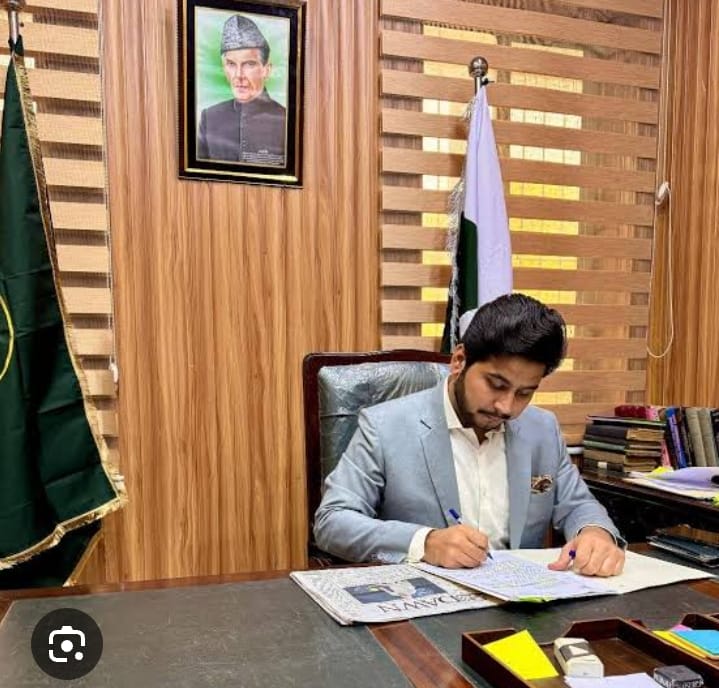
ISLAMABAD (Digital Post) Pakistan, in many ways, resembles a living museum of contradictions — a place where flaws are worn as ornaments, where corruption is the norm and honesty makes headlines. This is a land where deceit has become the national language and duplicity the cultural heritage. In such a society, if a government officer dares to declare, “I will not take a penny beyond my salary,” it is received not as a statement of principle, but as an act of madness. People react as though a spring has erupted in the middle of a desert.
It is against this bleak backdrop that the story of Rohit Kumar Gupta, Assistant Commissioner of Khanewal, shines like a rare beacon of integrity. His name evokes both hope and sorrow — hope because even in this darkened land, a light of honesty still burns; sorrow because integrity has become so rare that it now feels like an exception, not the rule.
Pakistan’s tragedy is not that its people are ungodly; on the contrary, mosques are full, Ramadan is observed, and pilgrimages to Mecca are routine. The tragedy is that prayer coexists comfortably with falsehood, fasting with fraud, and pilgrimage with profiteering. We worship with one hand and hoard with the other. Within this culture of contradictions, Gupta’s refusal to compromise on honesty feels like thunder on a silent night — startling, disorienting, and profoundly rare.
But Rohit Kumar Gupta is not just honest; he is dutiful. While many officials remain confined to air-conditioned offices, Gupta is often seen in the field — inspecting schools for absent teachers, visiting hospitals to check on missing doctors, walking through bazaars to hold profiteers accountable. Tasks that other bureaucrats delegate to their subordinates, he takes upon himself. And that, in itself, has restored a fragile sense of trust between citizens and the state.
Competence is another dimension of his character. Pakistan has witnessed honest men before, but honesty without capability often turns into helplessness. Gupta is different. Whether it is demolishing illegal encroachments, cracking down on land mafias, or coordinating between rival institutions like the revenue department, police, district council, and para-forces, he has shown that sincerity paired with competence can dismantle even the most entrenched structures of dysfunction.
This is no small achievement. In Pakistan, state institutions are notorious for working at cross purposes — often rivals in bureaucratic turf wars rather than partners in public service. Gupta has managed to align them on a single page. It is, in many ways, a case study in what leadership ought to look like.
And yet, the irony remains. Citizens of Khanewal admire Gupta, but beneath their admiration lies a quiet fear: “He won’t last long.” This single sentence captures the tragedy of Pakistan’s bureaucratic and political culture. Honesty, here, is never rewarded; it is punished. To be corrupt is to be “capable,” to be upright is to be naive. The honest officer is either transferred prematurely or sidelined into irrelevance. That such an expectation exists at all is the most damning indictment of our state.
Gupta’s story, therefore, is not just about one man. It is a mirror held up to the nation. He proves that honesty, dedication, and competence can coexist in public service — but he also reminds us how rare such coexistence has become. In a country drowning in scandals of bribery, patronage, and abuse of power, Gupta’s presence feels almost like an aberration.
Pakistan must decide: will it let this rare beacon die out, or will it protect it, nurture it, and replicate it? For if Rohit Kumar Gupta is allowed to fade into the bureaucratic wilderness — transferred, marginalized, or broken — it will not just be a personal tragedy; it will be a national failure.
In the end, Gupta stands as more than just an administrator. He is a lesson, a symbol, and a warning. A lesson that integrity is still possible. A symbol that competence can triumph over chaos. And a warning that if such men are not safeguarded, Pakistan will continue to sink into the quicksand of its own contradictions.
Gupta is not merely an officer. He is a rare beacon of integrity in a land drowning in darkness. The question is not whether he will endure. The question is whether we — as a society, as a state, as a people — deserve him at all.