

ISLAMABAD (Digital Posts) China’s Renewable Energy Revolution: What can Pakistan learn from China’s expansion of solar and wind energy?

Share
Written By Ms. Sarwat Iqbal, a Participant of ICSF-SBBWU Fellowship Programme 2026-2027
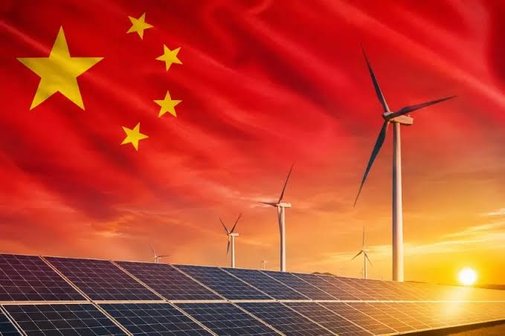
ISLAMABAD (Digital Posts) Need for energy in the world is increasing rapidly. Electricity has become a basic necessity for industry, agriculture, education, communication and daily life. China has made rapid progress in this field. It has built large-scale solar and wind power projects, improved the power transmission system and made new energy an important part of national development. By the end of 2025, China total installed solar power capacity in the country is about 1.2 billion kilowatts and the installed wind power capacity is about 640 million kilowatts. The National Energy has reached the A1 category.
China’s success also holds important lessons for Pakistan, as Pakistan has natural resources of both the sunlight and wide. China’s renewable energy development is not limited to a few large projects but also includes various methods of solar power, wind power, hydroelectric power, power transmission and energy storage. In 2025, China added more than 430 million kilowatts of wind and solar power generation capacity in a single year. In the same year, solar power increased by about 318 million kilowatts and wind power by about 120 million kilowatts.
China’s total renewable power installation reached about 2.337 billion kilowatts by the end of 2025, accounting for about 60 percent of the country’s total power generation capacity. The total installation of wind and solar power reached about 1.84 billion. According to the International Energy Agency, China accounted for more than 60 percent of new renewable energy installations worldwide in 2025. China installed about 370 million kilowatts of solar and 117 million kilowatts of wind power that year.
A key reason for China’s success is that it has not only focused on building power plants, but also developed large-scale power transmission systems and energy storage methods. This has made it easier to deliver electricity generated in remote areas to densely populated areas
China’s experience can be an important example for Pakistan. The first lesson is long-term planning. China did not consider renewable energy as a temporary project but made it part of the national energy policy. Pakistan has sample sunlight throughout the year. Installing solar panels on the roofs of homes, schools, government buildings, agricultural tube wells and industrial centers can increase local electricity generation. This can also reduce pressure on electricity transmission.
The third lesson is wind energy. Some areas of Pakistan have good potential for generating electricity from wind. China has established large wind power plants as well as projects in different regions according to local conditions. Pakistan can also increase its wind power generation capacity through scientific research and proper planning of suitable areas.
The fourth and most important lesson is to improve the electricity transmission system. It is not enough to generate electricity, it is also necessary to deliver it reliably to consumers. Pakistan should focus on improving the old electricity system, reducing power losses and effectively connecting new solar and wind projects to the national grid. The fifth lesson is about energy storage systems. The sun is not always there and the wind speed is not always the same.
Pakistan can also learn from China in terms of local industry and employment. If solar panels, batteries, inverters and related equipment are manufactured in the country, import costs can be reduced, new industries can be established and employment opportunities can be created for the youth. Finally, instead of copying China completely, Pakistan should benefit from its experience according to its own circumstances.
Pakistan’s geography, climate, economic conditions and power needs are different from China’s. Therefore, a strategy that is tailored to local needs will be more effective. China’s renewable energy development proves that with consistent planning, advanced technology, a robust power system and large-scale investment, solar and wind energy can become an important part of the national power system. China has given renewable energy a huge place in its power generation by 2025.
There is a clear message in this experience for Pakistan. The country has natural resources like sun and wind, so there is a need to make better use of them. If Pakistan focuses on long-term planning, modern transmission systems, energy storage, local industry and a trained workforce, it can not only help meet its electricity needs but also take steps towards reducing pollution, increasing employment and strengthening the economy.