
Islamabad (Digital Post) — Political Differences Have Their Place, But Where Is the Justice in Putting Ordinary Citizens in Difficulty?

Share
Islamabad (Digital Post) Pakistan’s history is filled with political turmoil, sit-ins, protests, and incidents of political confrontation. In any democratic society, political differences, protests, and disagreement with government policies are the fundamental and constitutional rights of the public and political parties. But unfortunately, in our country, the price of political slogans and displays of power is always paid by an ordinary, helpless, hardworking citizen. Whenever a political party takes to the streets, blocks roads, or calls for a wheel-jam strike, the life of the common man becomes difficult first. The question arises: why should an ordinary citizen, who has nothing to do with the power struggle and interests of political leaders and their followers, bear the consequences of their differences?
The Limits of Political Differences and the True Spirit of Democracy
Democracy is based on tolerance, mutual respect, and freedom of opinion. Articles 16 and 17 of the Constitution of Pakistan grant citizens the right to peaceful assembly and association, but at the same time, it is clear as daylight that the rights of one citizen begin where the fundamental rights of another citizen begin.
When main highways are blocked in the name of political protest, cities are disconnected from one another, and business centers are forcibly shut down, it is no longer peaceful protest; rather, it becomes an infringement upon the fundamental rights of ordinary citizens. The Constitution guarantees every citizen freedom of movement, the freedom to earn a livelihood, and protection of life. Can depriving ordinary people of these fundamental rights in the name of politics ever be justified?
Effects on the Lives of Ordinary Citizens: Some Bitter Realities
Only someone who becomes a victim of such a situation can truly understand the difficulties an ordinary person has to face because of political confrontation and road blockages.
1. Health Problems and Loss of Human Lives
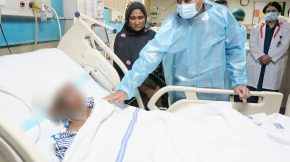
When roads are blocked, the health sector is among the most severely affected. Due to long queues and barriers (containers) placed on roads, ambulances remain stuck for hours. It has often been witnessed that a heart patient or a seriously injured person dies because they could not reach the hospital in time. A poor mother may lose her child, or a child may be deprived of the protection of a father. Can any objective of a political party compensate for the fact that an innocent life is lost as a result of political stubbornness?
2. Daily-Wage Workers and Economic Setback
In Pakistan, millions of people earn daily wages and use them to feed their children at night. Street vendors, daily-wage laborers, taxi and rickshaw drivers, and small shopkeepers are among those most affected by protests and road closures. A single day of a wheel-jam is enough to extinguish the stove in these poor households. On one side is the impact of inflation, and on the other is political turmoil, which further breaks their economic strength.
3. Education and the Future of Students
Because of blockades and an atmosphere of fear and unrest in cities, schools, colleges, and universities are forced to close. Examinations are postponed, and there is a risk that children’s academic year may be lost. Students, who are already suffering from a lack of educational facilities, face further mental stress because of these political disturbances.
4. Daily Business and Damage to the National Economy
The country’s already fragile economy suffers further decline because of such protests and closures. Business centers remaining closed cause losses worth billions of rupees on a daily basis. Disruption in the supply of food and other essential items causes the prices of vegetables, fruits, and other necessities in the market to rise sharply, and ultimately the burden also falls on the ordinary consumer.
The Role of the State and Government: Obstacles or Solutions?
While political parties are responsible in this entire process, serious questions are also raised about the strategies adopted by governments. Blocking roads by placing containers at various locations to stop opposition protests, restricting fuel supplies, and suspending internet or mobile services only aggravate the problem instead of solving it.
It is the government’s responsibility to make citizens’ lives easier, not to turn an entire city into a prison in order to deal with political opponents. When the administration blocks an entire city, it appears as though an undeclared curfew has been imposed on the citizens. Political and security measures should be adopted to handle the opposition rather than blocking the roads of the entire city and making life miserable for ordinary people.
A Moment of Reflection for Political Leaders
Our political leaders always claim that all their struggles are for the prosperity of the people, the survival of democracy, and the provision of rights. But if the result of this struggle is that the people themselves are humiliated and made to suffer, then what kind of commitment to the public is this?
Is democracy merely the name of seeking power?
Is the peace and security of the ordinary person of no value?
Is it not possible to have a form of politics in which protests take place without blocking the way of ordinary citizens?
In all modern and democratic countries around the world, specific sites are provided for protests, such as Speakers’ Corner in London or designated grounds. There, neither roads are blocked nor normal business activity is paralyzed. Unfortunately, in our country, the success of a protest is often judged by how severely the city was shut down and how much inconvenience was caused to the public. There is an urgent need to change this mindset.
The Way Forward and Possible Solutions
To overcome this serious situation and protect ordinary citizens from becoming targets of political confrontation, the following important measures are presented as suggestions:
Designation of Specific Sites for Protests: The government and all political parties should, through mutual consultation, designate a place (ground or park) in every major city where political parties can hold their rallies and protests, so that the rest of the city’s system can continue operating normally.
Implementation of Supreme Court Orders: Clear orders issued by the Supreme Court of Pakistan in the past, in which the blocking of roads and restrictions on the freedom of ordinary citizens have been declared unconstitutional, should be strictly implemented.
Political Code of Conduct: All political parties should jointly develop a code of conduct under which it is agreed that, regardless of how intense political differences may be, hospitals, educational institutions, transport, and public roads will never be blocked.
Change in Government Strategy: The government should end the politics of containers and the practice of blocking cities. Dialogue with the opposition and seeking political solutions is the wiser course.
Public Awareness and Civil Society: Civil society, the media, and the public must unite around the principle that they will not support any movement that creates obstacles on roads. Unless the public itself raises its voice for its rights, political parties will continue to use them for their own interests.
Conclusion
Political differences may be the beauty of democracy, but when these differences become a source of suffering for ordinary people, they become a cause of disrepute for democracy. No slogan, no political ideology, and no objective of any political party can be more important than the comfort, livelihood, and life of an innocent citizen.
The time has come for all politically insightful leaders, rulers, and state institutions to sit together and decide that the confrontation of politicians will remain within their own limits. Ordinary citizens should not be made fuel for this fire. Ensuring the safety of citizens, their dignity, and the smooth continuation of their daily lives is the greatest achievement of a true and genuine democracy.