

LAHORE (Digital Posts) AAS-in-Asia 2026 concludes at LUMS, brings over 1,000 scholars from 37 countries to Lahore

Share
LAHORE (Digital Posts): AAS-in-Asia 2026 concluded on Sunday at the Lahore University of Management Sciences (LUMS), marking the successful conclusion of a three-day international academic gathering that brought more than 1,000 scholars and participants from over 37 countries to Pakistan.
Held under the theme “Centering Asia: Refiguring Connections, Recharting Futures,” the conference brought together scholars, students, university leaders and academics from 517 institutions, including some of the world’s leading universities, such as Peking University, Tsinghua University, University of Tokyo, National University of Singapore, Nanyang Technological University, Harvard University, University of Cambridge, University of Oxford and Yale University.
AAS-in-Asia has previously been hosted in countries including South Korea, Indonesia, Nepal, Japan, India and Thailand. Its first edition in Pakistan brought an international academic community to Lahore.
The conference featured hundreds of panel sessions, pre-conference workshops, roundtables, open houses, exhibitions and cultural events held across different venues at LUMS. Discussions explored a wide range of themes, including Asia’s transformation and global perspectives, conflict and cooperation, democratic change, technology and society, artificial intelligence, Asian ecologies, cities and infrastructure, gender and marginality, cultural and artistic expression, and old and new approaches to knowledge and epistemology.
The sessions examined how Asia’s economic, political and cultural transformations are reshaping global debates, while also addressing issues including border disputes, contested sovereignties, civic spaces, climate disruption, displacement, inequality and social justice. Discussions also explored the role of literature, art, performance, heritage and everyday cultural practices in shaping Asian identities and creating spaces for connection and dialogue.
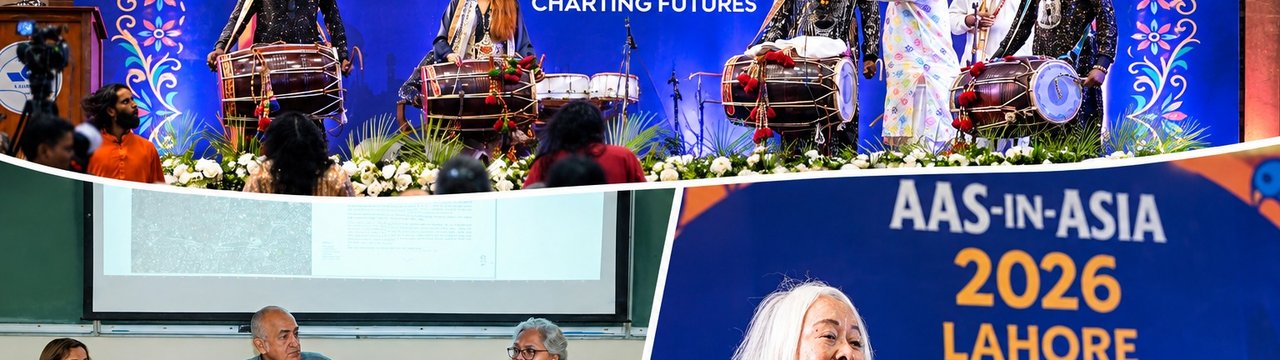
The opening ceremony featured welcome addresses by LUMS Vice Chancellor Dr. Ali Cheema and President of the Association for Asian Studies Prof. Elora Shehabuddin.
Welcoming delegates to LUMS, Dr. Cheema highlighted the importance of bringing diverse perspectives together and ensuring Pakistan’s participation in wider conversations on Asia and the world. “Pakistan must be an active part of the conversation about Asia and the world. Hosting AAS-in-Asia was particularly significant for LUMS and Pakistan as it enabled international scholars to engage with the country’s academic and cultural landscape, while also providing an opportunity to explore Lahore’s history as a centre of literature, art and intellectual exchange,” said Dr. Cheema.
President of the Association for Asian Studies Prof. Shehabuddin said AAS-in-Asia conferences had previously travelled across Asia, with each host location enriching the association’s academic conversations and creating opportunities for new collaborations. “We are thrilled to have around 1,500 people registered, with over 900 present, truly impressive given all the turmoil in the world.” She also acknowledged the contribution of LUMS faculty, staff, students, volunteers, committees, sponsors and partner organisations in bringing the conference to Pakistan.
Dr. Adil Najam delivered the keynote address on climate change, stressing that the issue could no longer be viewed solely as an environmental concern. Drawing on experiences from Asia and South Asia, including Pakistan, he discussed what he described as the “Age of Adaptation” and the implications of climate change for water, food, security, development, governance and social justice.
The conference programme brought together scholars working across disciplines and regions, with sessions examining contemporary challenges alongside historical and cultural connections that have shaped Asia. The discussions also created opportunities for early-career scholars, students and academics from different disciplines to develop new research and professional collaborations.
Among the conference’s cultural activities was a special calligraphy workshop, “The Contemplative Arts: A Studio Series,” which provided participants with an opportunity to engage with the region’s artistic traditions alongside the academic programme.
The conference also featured cultural performances, exhibitions and activities showcasing Lahore’s heritage, crafts, cuisine, music and artistic traditions. The cultural village on campus provided an informal space for international participants to experience aspects of the city and engage with local communities and creative practitioners.
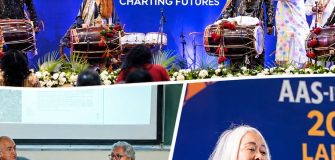
The closing ceremony’s cultural programme opened with a journey through South Asia’s expressive dance traditions. Bhangra, Gidda, Kathak and Sufi devotional folk dance came together in a continuous medley, celebrating the region’s diversity, rhythm and living cultural heritage.
The programme brought the three-day conference to a close, following an extensive exchange of ideas, research and cultural perspectives among scholars and participants from Pakistan and around the world.