

Rabby Wallet Extension Security: What a Multi-Chain Wallet Can—and Cannot—Protect

Share
A common misconception is that installing a reputable multi-chain wallet makes DeFi transactions safe by default. It does not. A wallet extension can explain a transaction, warn about suspicious permissions, and help you manage accounts across Ethereum and other EVM-compatible networks, but it cannot turn a careless approval into a harmless one. The more accurate view is that Rabby is a transaction interface and a security aid, not an insurance policy.
That distinction matters because DeFi risk is layered. A user can lose funds through a fake browser extension, a compromised device, a malicious token approval, a deceptive website, a vulnerable smart contract, or a transaction whose economic consequences were misunderstood. Rabby can reduce some of these risks by making the transaction mechanism more visible. It cannot eliminate risks that originate outside the wallet or in the code being called.
Why a multi-chain wallet needs more than a chain selector
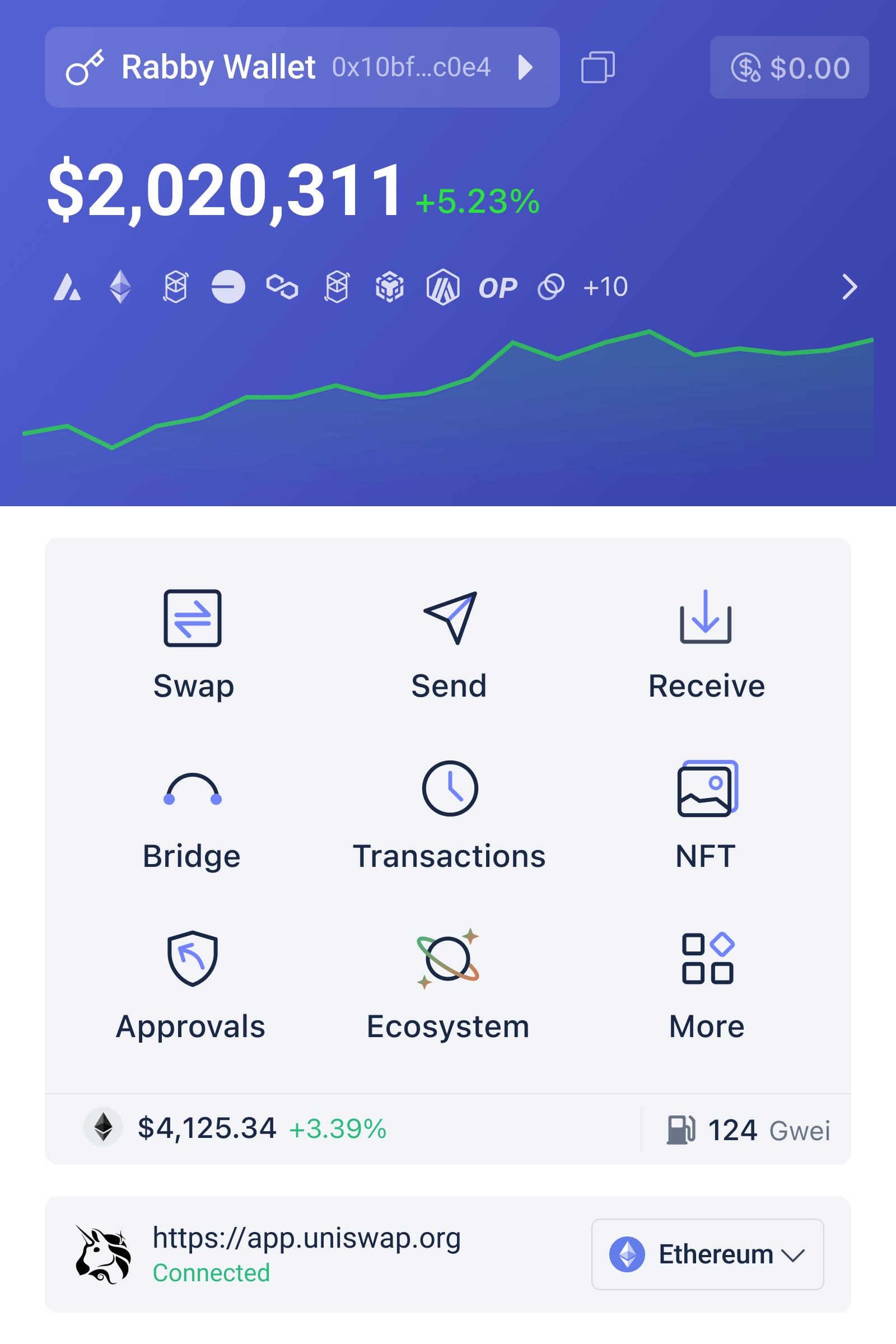
At a basic level, a multi-chain wallet lets one interface manage accounts and sign transactions on several networks. Rabby is designed for Ethereum and EVM chains, meaning networks that use compatible account and transaction structures. This is useful for DeFi users who move between Ethereum, layer-2 networks, and other EVM environments without maintaining a separate browser workflow for every chain.
But the important mechanism is not simply convenience. A wallet sits between a website and the blockchain. When a user clicks “swap,” “deposit,” or “mint,” the website prepares a transaction request. The wallet then presents that request for review and, if the user approves it, signs it with the account’s private key. The blockchain executes the signed instruction; the wallet does not reverse the result.
This creates a useful mental model: the wallet is closer to a signing instrument and transaction interpreter than to a bank account. It can show the intended recipient, contract, network, value, and requested permissions. It may also flag patterns that appear risky. Yet the final decision still depends on whether the user understands what is being authorized and whether the destination contract behaves as expected.
Myth: a warning means the transaction is definitely dangerous
Security warnings are valuable, but they are signals, not courtroom verdicts. A warning can reflect an unfamiliar contract, a broad token approval, a function that is difficult to decode, or behavior associated with known attack patterns. Some legitimate protocols may produce warnings because they are new, complex, or not fully recognized by a wallet’s risk systems. Conversely, the absence of a warning is not proof that a protocol is safe.
The practical lesson is to treat wallet analysis as one layer of due diligence. If a transaction asks for an unlimited token allowance, pause and ask why that scope is necessary. An allowance gives a contract permission to move a specified token from your account under defined conditions. It is not the same as sending tokens once, and leaving an unnecessary allowance active can enlarge the consequences of a later contract compromise.
There is also a subtler risk: users often recognize the token amount but ignore the function being called. A transaction may display a familiar asset while interacting with an unfamiliar contract. The relevant question is not only “How much am I sending?” but also “What authority am I granting, to whom, on which network, and under what execution rules?” That four-part check is more durable than memorizing a list of scam websites.
Installing the extension is part of the security model
For a US-based DeFi user, the installation step deserves the same caution as a transaction. Browser extensions can request significant permissions, and counterfeit versions may imitate names, logos, and descriptions. Use the project’s official distribution path or a carefully verified source when seeking a rabby wallet download. Before importing or creating an account, check that the extension, website, and browser listing agree on the project identity.
Never type a recovery phrase into a website, support chat, online form, or unsolicited “verification” window. A recovery phrase controls the wallet independently of the browser interface. If someone obtains it, changing a password or deleting the extension does not restore control. Hardware wallets can add a valuable separation between the browser and the signing key, although they do not protect a user who approves a malicious transaction on the hardware device.
Device hygiene matters as well. A wallet extension inherits some of the environment in which it runs. Malicious software, a fake browser update, an exposed recovery phrase, or a compromised computer can bypass the protections a transaction interface is designed to provide. For meaningful balances, consider using a dedicated browser profile or device, keeping software updated, and separating experimentation from long-term holdings.
What Rabby can improve in everyday DeFi use
The strongest case for a specialized DeFi wallet is not that it makes blockchains simple. It is that it can make complexity more legible. A well-designed interface can help users compare the network, contract, assets, and permissions before signing. That is especially useful when the same wallet address exists across multiple EVM chains but the assets and contracts on those chains are entirely different.
That distinction prevents a common operational error: confusing an address with an asset location. The same hexadecimal address may be used on several networks, but a token held on one chain does not automatically become available on another. Moving value between networks usually involves a bridge, exchange, or protocol-specific mechanism, each carrying its own smart-contract, liquidity, and operational risks.
A multi-chain interface can also reduce fragmented workflows, but convenience has a trade-off. When networks look similar in one dashboard, users may pay less attention to the chain selected in the transaction. A transaction sent on the wrong network may not be immediately recoverable, even if the address itself looks correct. Before signing, confirm the network, gas asset, destination contract, and expected result—not just the token symbol.
A practical security framework for signing
Before approving a transaction, use three levels of review. First is identity: did you reach the intended protocol through a trusted route, and is the contract address consistent with what you expect? Second is authority: is the transaction transferring funds, granting an allowance, or authorizing another capability? Third is consequence: what can happen if the contract is buggy, malicious, or later compromised?
This framework is deliberately conservative because blockchain execution is usually irreversible. It is also more useful than trying to decide whether a protocol “looks professional.” A polished interface says little about contract safety. Likewise, a transaction with a small dollar value can still be dangerous if it grants broad spending permission.
For larger positions, split responsibilities. A wallet used for testing new protocols should not necessarily hold long-term savings. Keep only the amount needed for a particular interaction in a more exposed account, and use a separate account or hardware signer for assets that do not need frequent movement. This does not remove smart-contract risk, but it limits the blast radius when a mistake occurs.
What to watch as multi-chain wallets evolve
Recent project positioning continues to emphasize Rabby as a wallet for Ethereum and EVM chains. The meaningful question is not whether a wallet supports more networks in the abstract, but whether it can preserve understandable transaction review as network count and protocol complexity grow. More integrations can increase usefulness while also creating more opportunities for confusing assets, unfamiliar contracts, and inconsistent risk signals.
A plausible next step for the category is better contextual signing: clearer explanations of contract behavior, allowance scope, chain-specific consequences, and changes from a user’s prior position. Whether those tools become genuinely protective will depend on the quality of their underlying data and on users’ willingness to stop when a transaction is unclear. The boundary remains important: no interface can independently establish that every smart contract will behave safely in the future.
The best way to use a Rabby browser extension is therefore neither blind trust nor constant suspicion. Use it to expose the mechanics of a transaction, then apply independent judgment to the protocol, permissions, network, and device. A wallet can make a dangerous action easier to recognize. It cannot make an unexamined action safe.
Frequently asked questions
Is Rabby a blockchain or an exchange?
No. Rabby is a non-custodial wallet interface for managing accounts and signing transactions, particularly across Ethereum and EVM-compatible networks. It does not replace the blockchain and does not automatically take custody of your assets.
Does a wallet warning prove that a DeFi protocol is a scam?
No. A warning should trigger investigation, but it can reflect uncertainty, unfamiliar contracts, or difficult-to-interpret transaction data. Treat it as a risk signal and examine the contract, permissions, network, and expected outcome before deciding.
Can a hardware wallet eliminate Rabby security risks?
No. A hardware wallet helps keep the signing key isolated from the browser, which is a meaningful protection. However, the user can still approve a malicious or misunderstood transaction. Hardware security protects key custody; it does not guarantee that every signed instruction is wise.
What is the safest first step after installing a wallet extension?
Verify the installation source, protect the recovery phrase offline, and test the interface with a small amount before using substantial funds. Review the selected network and transaction permissions every time, especially when interacting with a new protocol.