

Attock (Digital Post) The Sacrifice of Attock Police

Share
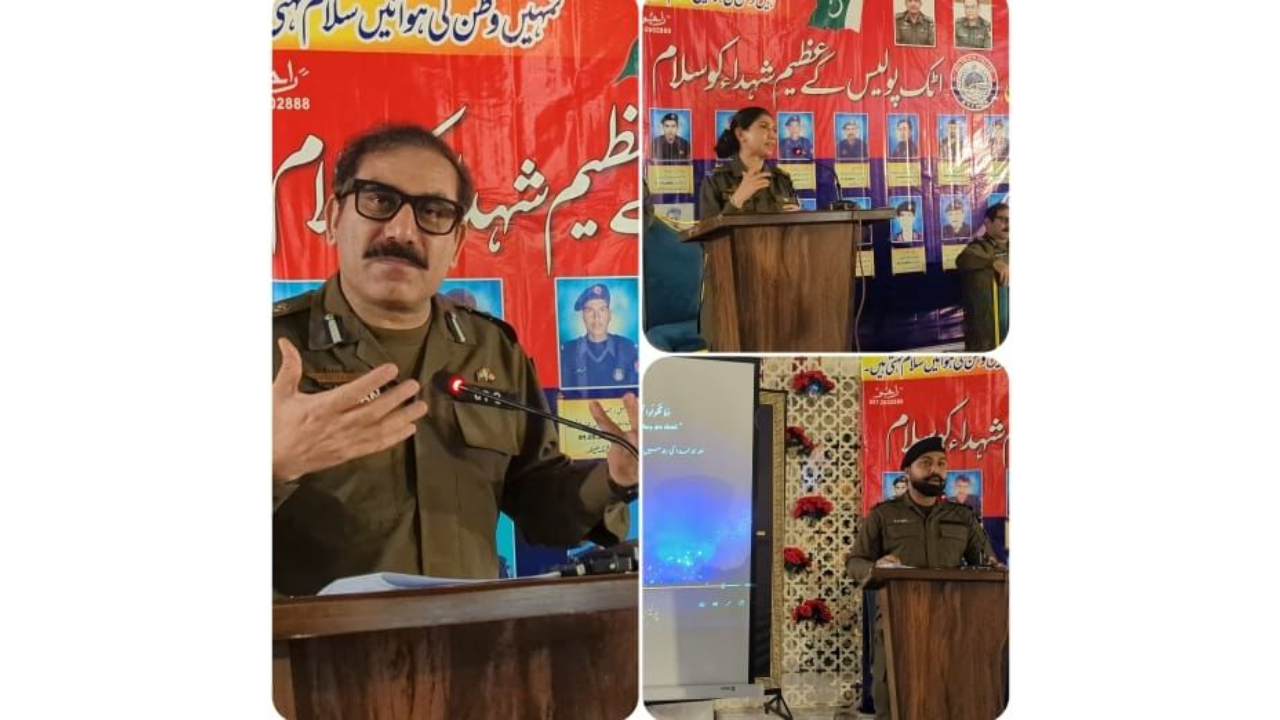
Attock (Digital Post) The observance of Police Martyrs’ Day in Attock was far more than a ceremonial event on an official calendar. It served as a reminder of a larger national truth: peace is never an accident. It is built, protected and sustained by men and women who willingly place themselves between danger and society.
The wreath-laying ceremonies, guard of honor, prayers for the departed, gatherings with the families of fallen officers, and commemorative tree plantation drives were not merely symbolic acts. They reflected a collective acknowledgment of a debt that can never truly be repaid. Every stable society owes a profound obligation to those who sacrifice their lives to uphold the rule of law and protect the lives of others.
Over the past two decades, Pakistan has faced some of the most complex security challenges in its history. Terrorism, violent extremism, organized crime, sectarian violence and emerging cyber threats have tested the resilience of state institutions. Much attention has rightly been paid to the role of the armed forces in confronting these challenges. Yet another institution has quietly stood on the front lines, often with far fewer resources and far less public recognition: the police.
Unlike many other state institutions, policing operates in direct contact with the public. Police officers are present in crowded markets, on busy highways, outside courts, near places of worship and at public gatherings. They are the first responders to emergencies and often the first targets of those who seek to undermine public order. Their service demands not only professional competence but also extraordinary courage.
The story of Attock Police is inseparable from this larger national narrative. The district occupies a strategically significant location, serving as a gateway between regions and connecting diverse communities. Maintaining law and order in such an environment requires vigilance, discipline and sacrifice. The twenty-four martyrs of Attock Police stand as a testament to those values.
One of the most meaningful aspects of the observance in Attock was the attention given to the families of fallen officers under the leadership of District Police Officer Attock, Sardar Mavarhan Khan. Across the world, strong institutions are distinguished not merely by operational success but by how they treat those who have paid the ultimate price in service. Honoring martyrs is important; supporting their families is indispensable. Commemoration without commitment risks becoming symbolism without substance.
Behind every martyr’s name lies a story that extends beyond the individual. There is a family left behind, children growing up without a parent, parents mourning a son, and spouses carrying memories that cannot be replaced. The cost of public safety is often measured not in statistics but in human lives and personal grief. Recognizing this reality is essential if society is to genuinely appreciate the sacrifices made in its name.
The relationship between sacrifice and institutional morale is often underestimated. Every police officer who reports for duty understands the risks associated with the profession. Knowing that the institution and society will stand by their families in the event of tragedy reinforces confidence, loyalty and dedication. It sends a powerful message that service and sacrifice will not be forgotten once the ceremonies end.
The observance of Police Martyrs’ Day also invites reflection on the changing nature of security itself. Modern policing extends far beyond traditional crime prevention. Today’s police forces confront cybercrime, financial fraud, narcotics networks, digital radicalization and increasingly sophisticated criminal organizations. Technology has transformed both crime and law enforcement. As threats evolve, policing must evolve as well.
This reality places significant responsibilities on policymakers. Modern police forces require advanced training, technological resources, investigative capacity and continuous professional development. Security cannot be sustained through bravery alone. Courage must be matched by investment, institutional reform and strategic planning.
At the same time, public cooperation remains indispensable. Effective policing is impossible without public trust. In societies where citizens view law enforcement as a partner rather than an adversary, security outcomes tend to be significantly stronger. Building this trust requires transparency, accountability and meaningful engagement with communities. It is a process that demands effort from both institutions and citizens.
The ceremonies in Attock also carried a deeper civic message. The prayers and commemorations reminded participants that remembrance is not merely an act of looking backward. It is also an act of looking forward. Societies honor their martyrs not simply to preserve memories but to reinforce values. Sacrifice, integrity, public service and commitment to the common good are principles that remain essential to national progress.
The tree plantation activity held in memory of fallen officers was particularly significant in this regard. Trees symbolize continuity, growth and hope. In many ways, they reflect the enduring legacy of those who have sacrificed their lives in service. While human lives are finite, the values they embody can continue to flourish through future generations.
Attock’s observance of Police Martyrs’ Day therefore deserves attention beyond the district itself. It highlights an issue that resonates nationally and internationally: the importance of recognizing those who defend public order in increasingly challenging circumstances. Around the world, democratic societies depend upon professional law enforcement institutions to safeguard rights, maintain stability and uphold justice. Their effectiveness ultimately rests upon the dedication of individuals willing to accept personal risk for the benefit of others.
As Pakistan continues its journey toward greater stability and development, it must remain mindful of the sacrifices that have made progress possible. Economic growth, social advancement and democratic governance all depend upon security. Security, in turn, depends upon institutions and individuals prepared to defend it.
The martyrs of Attock Police represent more than a chapter in local history. They embody a universal principle: that public service reaches its highest form when duty is placed above self-interest. Their sacrifice is a reminder that peace carries a price, and that every generation bears a responsibility to preserve the values for which others have given their lives.
The true measure of respect for martyrs is not found in speeches, ceremonies or memorials alone. It is found in the commitment to strengthen institutions, support the families of the fallen, uphold the rule of law and build a society worthy of their sacrifice.
That remains our collective responsibility. And it remains the most meaningful tribute we can offer.