

ISLAMABAD (Digital Post) Pakistan PM proposes second phase of Iran-US talks..?

Share
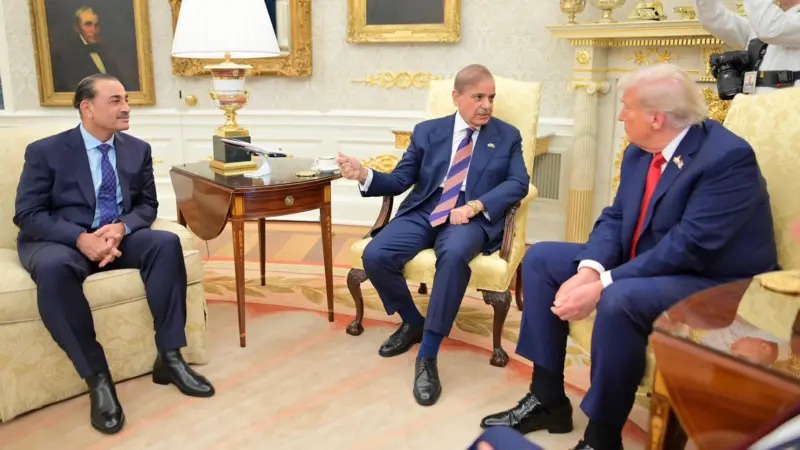
ISLAMABAD (Digital Post) The Prime Minister of Pakistan has proposed a second phase of Iran-US talks to address outstanding issues, including Iran’s nuclear program and the situation in the Strait of Hormuz, building on previous discussions.
Following the first round in Islamabad, Prime Minister Shehbaz Sharif has put forward a comprehensive proposal for the next stage, aiming to turn the temporary Iran-US ceasefire into a permanent peace agreement.
The latest situation regarding the second phase (Phase 2) of the US-Iran talks in Islamabad is as follows:
Venue and time of the talks

The Pakistani government has proposed that the second phase of the talks be held in Islamabad to maintain the continuity of the first phase. It is expected to start in the next few weeks; however, the final dates will be announced after obtaining consent from the parties (Washington and Tehran).
Proposed agenda for the second phase ;….
Pakistan has proposed to focus on the following key points for the second phase:…
Extension of ceasefire:…. Converting the current temporary ceasefire into a long-term agreement;…
Maritime security:… Ensuring safe passage of commercial vessels in the Strait of Hormuz and the Arabian Sea.
Prisoner exchange:… Progress on the release of prisoners on humanitarian grounds;…
Nuclear program and sanctions:….. Initial discussions on Iran’s nuclear program and easing of economic sanctions on Iran.
Reactions from the parties. US: The White House and Vice President JD Vance have described the talks in Islamabad as “constructive”, but they want concrete guarantees before any permanent agreement.
Iran: ….The Iranian delegation has also described the negotiation process as positive but insists that lasting peace is difficult without the lifting of sanctions.
4. Pakistan’s role as a facilitator;……
Prime Minister Shahbaz Sharif and Pakistani diplomatic officials are currently in constant contact with China, Saudi Arabia, and Qatar to develop a framework for the second phase that is acceptable to both sides.
Pakistan is trying to move the negotiations into the second phase, from mere statements to written agreements.
The main points of the proposal for the second phase are as follows:….
Place and time of the talks: ….Pakistan has suggested that the next round of talks be held in Islamabad, where technical delegations from both countries can have in-depth discussions.
Agenda, outstanding issues;…. For the second phase, Pakistan has proposed to include sensitive issues such as Iran’s nuclear program, regional security, and freedom of navigation in the Strait of Hormuz on the agenda.
Pakistan has always played a key role in peace and stability in the region, especially in efforts to end conflicts and ceasefires between neighboring countries and the Muslim Ummah. Pakistan’s diplomacy has been appreciated globally.
Prime Minister Shehbaz Sharif has expressed deep hope for positive progress in the talks between Iran and the United States, calling it a “historic moment” for Pakistan. He said that bringing the two countries to the same table after decades is a diplomatic achievement for Pakistan, and he is hopeful for the lasting results of these efforts.

The Prime Minister says that the credit for direct talks between Iran and the United States after decades goes to Pakistan, and Pakistan is still hopeful for positive progress in the talks.
Continuation of talks: Addressing the recent meeting of the federal cabinet, the Prime Minister said that although the first round of Islamabad talks ended without any final agreement, the ceasefire between the parties is still in place and Pakistan is making “intensive efforts” to continue it.
Historical significance:…. The Prime Minister clarified that for the first time in 47 years, the two delegations sat face to face, which goes to the efforts of Pakistan’s leadership, especially Deputy Prime Minister Ishaq Dar and Field Marshal Asim Munir.
Global appreciation: …. The Prime Minister expressed satisfaction over the appreciation of Pakistan’s conciliatory role by other world leaders, including Canadian Prime Minister Mark Carney and the Japanese Prime Minister.
Future course of action:… Pakistan has proposed a second phase of talks to further discuss outstanding issues, such as Iran’s nuclear program and the situation in the Strait of Hormuz. The Prime Minister of Pakistan believes that just as the Oslo Accords or the Good Friday Agreement took time, similarly, establishing a lasting peace between Iran and the United States requires patience and continuous diplomacy.

During the federal cabinet meeting, he said that “Pakistan played an important role in reducing tensions on many occasions during the tense situation in the region.” “Pakistan hosted mediation and negotiations between the US and Iran at a time when the world economy was reeling, and it is the result of Pakistan’s efforts that the ceasefire between the two sides is still in place.”On the other hand, Iranian Ambassador to Pakistan Reza Amiri Moqadam has termed the Islamabad talks as an important diplomatic process and said that it is not just an event but an ongoing process, which can create a sustainable framework for the interests of all parties through mutual trust and political commitment. In his statement on X, he said that the talks held in Islamabad have provided a strong diplomatic foundation, which can pave the way for positive developments in the future. He appreciated Pakistan’s hosting and said that the brotherly country of Pakistan played a very important role in holding these talks. The Iranian ambassador especially thanked Prime Minister Shahbaz Sharif and Field Marshal Asim Munir, who played a goodwill and positive diplomatic role. He added that the Pakistani government, army, police, and other security agencies made extensive arrangements for the talks, which provided a peaceful, orderly, and secure environment for the guests. He stressed that the Iranian high-level negotiating team participated in the talks, keeping in mind dignity, self-confidence, and public interests. He said that Iran tried to ensure the protection of its national interests and the legitimate rights of the people through these talks. The Iranian ambassador expressed hope that if all parties demonstrate mutual trust and seriousness, this diplomatic process can create new opportunities for stability and cooperation in the region. Recall that Pakistan’s Deputy Prime Minister and Foreign Minister Ishaq Dar on Sunday expressed hope that the US and Iran will continue the talks. He said that ‘it is extremely important that the parties remain committed to their commitment regarding the ceasefire.’ He added that ‘Pakistan has been playing its role in facilitating contacts and talks between the Islamic Republic of Iran and the United States of America and will continue to play this role in the coming days.’ Ishaq Dar said that he hopes that both countries will move forward with positive thinking for sustainable peace and prosperity in the region and the world. Both countries responded positively to Prime Minister Shehbaz Sharif’s request. There have been several rounds of comprehensive and constructive talks between the two sides. He said that he, as Deputy Prime Minister and Field Marshal Asim Munir, assisted in the negotiation process. Ishaq Dar further said that he is grateful for the recognition of Pakistan’s positive role by both countries.

The Foreign Minister has contacted Saudi Foreign Minister Prince Faisal bin Farhan over the phone, in which important diplomatic matters were discussed. During the conversation, Ishaq Dar informed his Saudi counterpart about the progress made regarding the Islamabad talks and stressed that it is very important for all parties concerned to implement the ceasefire commitments. Highlighting Pakistan’s role as a facilitator in the negotiation process, the Deputy Prime Minister reiterated his commitment that Pakistan will continue to support all diplomatic efforts to promote peace and stability in the region and beyond, and to provide its cooperation to continue the negotiation process. During this time, Ishaq Dar has had a telephone conversation with Egyptian Foreign Minister Badr Abdel Ati, in which important regional and global issues were discussed. During this conversation, the Deputy Prime Minister gave his Egyptian counterpart a detailed briefing regarding the Islamabad talks and informed him of Pakistan’s continuous efforts to facilitate contacts between the parties. The Pakistani Foreign Minister stressed that it is extremely important for all parties to abide by the ceasefire agreement. In addition, the US President acknowledged in a long post on the social media platform Truth Social that the long negotiations in Pakistan went ‘well’ and ‘most points were agreed upon.’ President Donald Trump ordered a naval blockade of the Strait of Hormuz on Sunday in response to Iran’s tough stance on nuclear weapons during talks with the US in Islamabad. In the post, Trump further wrote that “Iran promised to open the Strait of Hormuz, and they have deliberately failed to do so. This has caused anxiety, chaos, and suffering to many people and countries around the world. They say they have laid mines in the water, even though their entire navy and most of their ‘mine droppers’ (mine-dropping ships) have been completely destroyed. They may have done so, but what ship owner would want to take that risk? The reputation of Iran and the remaining dignity of their ‘leaders’ have been greatly discredited and permanently damaged, but we are now beyond all of that. They had better start the process of opening this international waterway as they promised! They are violating every law in the book. I have been fully briefed by Vice President J.D. Vance, Special Envoy Steve Witkoff, and Jared Kushner on the meeting that took place in Islamabad under the gracious and highly capable leadership of Pakistan’s Field Marshal Asim Munir and Prime Minister Shahbaz Sharif. They are extraordinary people, and they thank me endlessly for preventing a horrific war with India that could have cost 30 to 50 million (30 to 50 million) lives. I am always happy to hear that. The humanity that is being mentioned is incomprehensible. The meeting with Iran began early in the morning and lasted all night, almost 20 hours. I could go into great detail and talk about the many things that have been achieved, but only one thing matters. Iran is not ready to give up its nuclear ambitions! In many ways, the points agreed upon are better than continuing our military operations to their logical conclusion, but all those points pale in comparison to leaving nuclear power in the hands of such unstable, difficult, and unpredictable people. My three representatives, as time went on, surprisingly became very friendly and respectful to the Iranian representatives Mohammad Baqer Qalibaf, Abbas Araqchi and Ali Baqeri, but that doesn’t matter because they were absolutely inflexible on the single most important issue and, as I have always said, from the very beginning, and even many years ago, Iran will never have nuclear weapons! So, the situation is that the meeting went well, most of the points were agreed upon, but the one point that really mattered, namely ‘nuclear (weapons)’, was not agreed upon. Effective immediately, the United States Navy, the best navy in the world, will begin a blockade of all ships entering or leaving the Strait of Hormuz. There will come a time when we will be on an ‘all in, all out’ basis, but Iran has not stopped it by simply saying ‘there might be a mine somewhere’ that no one but them knows about. This is global extortion, and leaders of nations, especially the leaders of the United States, will never be blackmailed or coerced.
I have also directed my Navy to search for and seize any ship in international waters that has paid tolls to Iran. No one paying illegal tolls will be given safe passage on the high seas. We will also begin the work of destroying the mines that the Iranians have laid in the Strait. Any Iranian who fires a shot at us or at peaceful ships will be sent to hell! Iran knows better than anyone how to end a situation that has already destroyed their country. Their navy is gone, their air force is gone, their anti-aircraft and radar systems are useless, Khamenei and most of his ‘leaders’ are dead, all because of their nuclear ambitions. The blockade will begin soon. Other countries will join the blockade. Iran will not be allowed to profit from this illegal act of extortion. They want money and, more importantly, they want nuclear power. Moreover, at the right time, we are completely ‘locked and loaded’, and our military will eliminate what little Iran is left. On the other hand, Baqir Qalibaf, the head of the Iranian delegation negotiating with the US in Islamabad, has said that his colleagues in the Iranian delegation made positive proposals for the future, ‘but despite this, the opposing side has failed to gain the trust of the Iranian delegation at this stage.’ Regarding the 21-hour talks brokered by Pakistan, US Vice President JD Vance said, ‘We could not reach an agreement.’ The speaker of Iran’s parliament said in his statement on ‘X’, ‘I had made it clear before the talks that we have good intentions, but because of the experiences of the last two wars, we do not trust the opposing side.’Now it depends on whether he can gain our trust or not.’ Baqir Qalibaf added that we also consider diplomacy as an important means of expressing power, ‘which is used to protect the rights of the Iranian nation along with the military struggle, and we will not stop our efforts to consolidate the achievements of Iran’s 40-day defense for a moment.’ He praised Pakistan’s role in making the talks possible, saying, ‘I salute the people of Pakistan.’ The Iranian Foreign Ministry has said that no one expected that an agreement could be reached in a single round of talks with the United States. ‘Naturally, we should not have expected to reach an agreement in just one session from the beginning. No one expected that.’ He said that Tehran is ‘fully confident that contacts will continue between us and Pakistan, as well as with our other friends in the region.