

Islamabad (Digital Post) World’s eyes focused on US-Iran peace talks

Share
Islamabad (Digital Post) The Pakistani capital, Islamabad, is currently the center of global diplomacy, where historic talks between the United States and Iran for a ceasefire and lasting peace have begun. Pakistan is hosting these talks on April 10, 2026, and has played an important mediating role in ending recent regional tensions. Thanks to successful, dynamic diplomacy, the eyes of the world are focused on Pakistan today. Pakistan has further strengthened its position in the international community. Pakistan has played a responsible and positive role in global affairs, a prominent example of which is the effective diplomatic efforts to end tensions and promote peace in the region.
Role of Pakistan: Prime Minister Shahbaz Sharif and Deputy Prime Minister Ishaq Dar are facilitators in the talks.
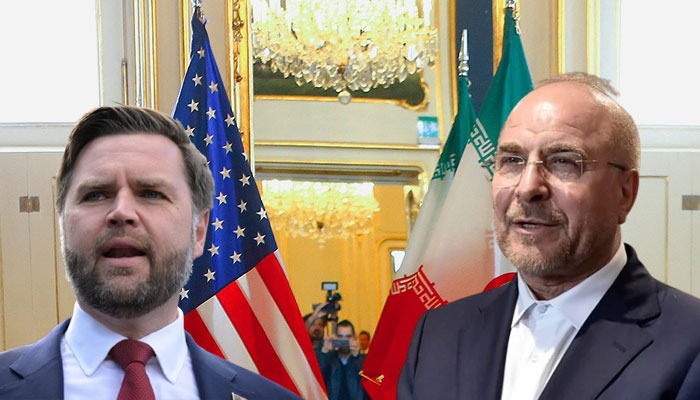
US delegation: The US delegation is led by Vice President JD Vance, which also includes Jared Kushner and Steve Witkoff.
Iranian delegation: Led by Foreign Minister Abbas Araqchi and Speaker Mohammad Baqer Qalibaf.
The Serena Hotel in Islamabad’s Red Zone hosts the talks, while authorities have implemented tight security arrangements and declared a public holiday in the federal capital.
The main objective of these talks is to turn a temporary two-week ceasefire into a permanent peace agreement. The main points under discussion are as follows:
Control of the Strait of Hormuz: Iran wants to maintain control of this vital trade route and impose tolls on ships, while the United States is demanding its immediate and complete restoration.
Scope of the ceasefire: Iran insists that Israeli attacks against Lebanon (Hezbollah) should also be part of the agreement, while Israel has indicated that it will continue its operations in Lebanon.
Nuclear program and sanctions: The talks are also expected to discuss Iran’s right to enrich uranium and the lifting of international sanctions on it.
Although there are high hopes for these talks at the global level, experts say that due to the big differences between the two countries, there is little expectation of any immediate major breakthrough, but the continuation of the talks is being considered the first step towards peace in the region.
Furthermore, a high-level consultative meeting has been held under the chairmanship of Prime Minister Shehbaz Sharif, in which the political and military leadership has expressed its determination to make the ceasefire talks successful. The meeting was attended by top military and civilian leadership, detailed consultations were held regarding the Islamabad talks, and important decisions were also taken to make the talks successful. Deputy Prime Minister and Foreign Minister Ishaq Dar, Chief of Defense Forces Field Marshal Asim Munir, Interior Minister Mohsin Naqvi, Defense Minister Khawaja Asif, and the Foreign Secretary were also present in the meeting. The participants of the meeting resolved to make the Islamabad talks successful. The meeting was informed that Pakistan’s positive and constructive role in the ceasefire is being appreciated at the global level; this opportunity for peace will not be wasted. According to sources, the participants paid tribute to the Field Marshal for playing a key role in the ceasefire. Earlier, when Field Marshal Syed Asim Munir arrived at the Prime Minister’s House, Prime Minister Shehbaz Sharif welcomed him and congratulated him on the two-week ceasefire. The Prime Minister appreciated the role of the Field Marshal and also informed him about the cabinet decision. Interior Minister Mohsin Naqvi was also present on the occasion.
Pakistan has made the impossible possible. Pakistan has achieved a ceasefire less than 90 minutes before the deadline set by US President Donald Trump, while this move gave peace a chance and averted a brutal attack on Iran that would have affected 93 million ordinary Iranians. Everyone knows that starting a war is easy, but stopping it is difficult. In fact, within hours of the ceasefire announcement, Iran launched more drones and missiles towards its Gulf neighbors, and Israel indiscriminately targeted civilian areas in Lebanon under the pretext of eliminating Hezbollah targets.
After nearly 40 days of war, US and Iranian delegations have finally arrived in Islamabad for talks, and it is expected that a ceasefire between the two countries, brokered by Pakistan, will lead to a lasting peace agreement through negotiations. When asked about the prospects for the talks, Talal Chaudhry, Minister of State for Interior in Prime Minister Shehbaz Sharif’s cabinet, said: “We are praying, we are trying, we are hoping for the best.” The White House has confirmed that Vice President JD Vance, Special Envoy for the Middle East Steve Witkoff, and Donald Trump’s son-in-law Jared Kushner are representing the US in the talks with Iran, while the Iranian delegation includes Foreign Minister Abbas Araqchi and Parliament Speaker Mohammad Baqer Qalibaf.The movement of the negotiating delegations is being kept under wraps for security reasons, but it is currently expected that this phase of the talks will last two days. The immediate start of direct talks with Israel, which both sides have now agreed to, and the announcement that the army and security forces will begin the full restoration of state authority, as Prime Minister Nawaf Salam did on Thursday, may be tantamount to ‘slow and steady’. However, all hopes are that the talks will be successful, that Lebanon will also be included in the talks in Pakistan, and that Iran will agree to sever ties with militant organizations so that Israel will have no justification to continue its brutal attacks. In the initial round of talks, the Pakistani leadership will hold separate meetings with both delegations, and then indirect or direct talks are expected between Iran and the United States. However, the Pakistani government has not yet officially said anything about this. The two-week ceasefire between Iran and the United States has become necessary due to the efforts of Pakistan, Turkey, Egypt, and a few other countries, but it will not be easy for Islamabad to turn this temporary ceasefire into a lasting agreement. Since Wednesday night, statements have emerged from the Iranian leadership that suggest that this ceasefire may not last long. Israel continued to attack Lebanon, and Iran called it a violation of the ceasefire and claimed that the ceasefire also applied to Lebanon, where its pro-government militia, Hezbollah, is fighting Israel. However, both the United States and Israel denied this, but then on Thursday, a statement issued by the Israeli Prime Minister’s Office said that Benjamin Netanyahu had instructed his government to negotiate with Lebanon. Before this statement, Lebanese Prime Minister Nawaf Salam had spoken to his Pakistani counterpart Shehbaz Sharif and, according to the Pakistani Prime Minister’s Office, the Lebanese Prime Minister had sought Pakistan’s ‘support’ to end the attacks on the country. Given this development, it can be assumed that at least the first round of talks between Iran and the United States will definitely take place, but observers say that their success will depend on Tehran and Washington. Pakistan has played an important role as a mediator so far, but these talks will be between the United States and Iran. The whole process will depend on how far Iran and the US will back down from their stated positions. There are still many obstacles to an agreement, but with both sides cautious about returning to the battlefield, it seems that a (sustainable) ceasefire agreement is possible. In order to make the talks between Iran and the US possible, both Pakistan’s civilian government and the Chief of Defence Forces (CDF) Field Marshal Asim Munir have held public and private talks with most of the world’s leaders over the past month or so. On the one hand, Prime Minister Shehbaz Sharif and Foreign Minister Ishaq Dar have been in touch with Iran, the Gulf countries, China, and other partners, while Field Marshal Asim Munir has also been in touch behind the scenes with several foreign leaders, including US President Donald Trump. However, the journey ahead in the talks may be a bit difficult. Many are also wondering what the likely outcome of the Islamabad talks will be: the honest answer is that you would need a magic ball or an astrologer for that. Such negotiations are never easy. US Senator George Mitchell once described the 1998 Good Friday Agreement, which brought peace to Northern Ireland, as “700 days of failure and one day of success”. Pakistan has “frustrated” relations with both the Trump administration and the Iranian regime and “will try to reassert its reputation as an international player and peacemaker in the world.” It has also improved its relations with China in this situation, and some in India are angry that Pakistan is gaining ground as a result. However, it is also certain that the end of this war has its own interests, as well as those of other countries in the world. Meanwhile, the latest Gallup survey has revealed that the Pakistani people are united in supporting the Iran-US ceasefire, and the government has strong public support for the ceasefire efforts. 93% of Pakistanis support the ceasefire, while 80% of Pakistanis hope for lasting peace from the US-Iran talks.A quick public survey conducted by Gallup Pakistan on April 8 and 9, 2026, revealed that a large number of Pakistanis not only support Pakistan’s role in brokering a ceasefire in an international conflict but also express hope for a positive outcome. The survey results came ahead of key diplomatic talks. According to the survey, 82 percent of Pakistanis said they were aware of the Pakistani government’s efforts for a ceasefire, of which 46 percent said they were well informed, while only 14 percent expressed ignorance. According to the survey, 93 percent of Pakistanis supported Pakistan’s mediation role in the conflict, with 72 percent expressing strong support, while the number of those opposed was very low. The survey also revealed that 88 percent of citizens believe that Pakistan should play an active mediation role in international conflicts, while 5 percent said they would remain neutral and 3 percent would support one side. Moreover, 80 percent of Pakistanis expressed hope that the ceasefire could pave the way for permanent peace, and 44 percent of them are very optimistic about peace. The ceasefire between the US and Iran, which was achieved as a result of Pakistan’s efforts, has only been in place for a day, when Israel’s heavy bombing of Lebanon and the subsequent response to it have raised questions about the future of the Strait of Hormuz. But the eyes of the world are now on the negotiations to turn this conditional and temporary ceasefire into an agreement. The announcement of these talks in Islamabad was first made in a statement by the Iranian Supreme Council, after which Pakistani Prime Minister Shahbaz Sharif confirmed that he had invited the negotiating teams of both countries to come to Islamabad on April 10, 2026, after the ceasefire agreement. The Pakistani Prime Minister wrote in his message on ‘X’ that the parties have shown exceptional insight and understanding and have been constructively engaged in advancing the cause of peace and stability, and the purpose of this invitation is to further discuss for the final resolution of all disputes. Shehbaz Sharif also expressed hope that the ‘Islamabad Talks’ will be successful in establishing lasting peace, and he looks forward to sharing more good news in the coming days. Shehbaz Sharif also spoke to President Masoud Peshkeshian, in which the Iranian President confirmed that his country will participate in the talks to be held in Islamabad. Deputy Prime Minister Ishaq Dar, while addressing the Senate, clarified that the focus of the government and military leadership is on regional stability and responsible diplomacy. The Deputy Prime Minister said that when Iran was attacked, I was in Medina. I said from there that Pakistan should immediately condemn the attack on Iran. Pakistan was the first Islamic country to condemn the attack on Iran. Shortly after the attack, it contacted Iranian Foreign Minister Araqchi. Within 3 or 4 hours of the attack on Iran, strikes on nearby countries began. The Deputy Prime Minister said that a meeting was held between Saudi Arabia, Egypt, Turkey, and Pakistan on this issue. Both parties gave the green signal for the meeting in Islamabad. The meeting of the four countries was to be held in Istanbul first, which I arranged in Islamabad. Ishaq Dar said that the Chinese Prime Minister called me to China on March 31 regarding the situation in the region. We, both countries, agreed on five points. Dozens of countries expressed their support for us. The UN Secretary General called me and appreciated our efforts. The US gave a list of 15 points, which we gave to Iran. Iran gave a list of five points. Yesterday, there was a very dangerous development, and Israel attacked Iran. In response, Iran attacked the Jubail region of Saudi Arabia. The Deputy Prime Minister said that before last night, I was very hopeful. I do not want to go into much detail on this issue; the Prime Minister, the Field Marshal, and the Foreign Office are working for peace in the region.The Emirati media office reported that the successful air defense interception caused a fire at the port, which was brought under control by emergency response teams, during which a Nepalese citizen was seriously injured and taken to the hospital for medical treatment, while three Pakistani citizens were injured. The UAE has claimed that its air defense system has intercepted several Iranian missiles and drones, and the air defense system is actively countering missile and drone threats. On the other hand, Chinese Foreign Ministry spokesperson Mao Ning said that China supports Pakistan’s role in the ceasefire and hopes that the parties will not miss the opportunity for peace. Mao Ning said that Beijing welcomes all efforts to help achieve peace and appreciates Pakistan’s active role in promoting the dialogue process. The Chinese Foreign Ministry stressed that the parties should resolve their differences through dialogue. Meanwhile, Iranian Ambassador to Pakistan Reza Amiri Moqadam has said that Pakistan’s positive and constructive efforts to stop the conflict under good faith and mediation have entered an important and critical stage. Earlier, the Iranian state news agency IRNA reported that Iran has submitted peace proposals to Pakistan with the aim of ending the ongoing war with the United States on a permanent basis. According to IRNA, the Iranian delegation has submitted its recommendations in response to the American proposals, which were finalized by the Iranian leadership after a detailed review for about two weeks before submission. Meanwhile, US President Donald Trump wrote in a post on his social media platform Truth Social that an entire civilization will end tonight, which can never be brought back. I don’t want it to happen, but it probably will. However, now that we have changed the entire regime, where people with different, more intelligent, and less extremist thinking will prevail, perhaps something revolutionary and wonderful will happen. Trump wrote that this could be one of the most important moments in the world’s long and complex history, a 47-year history of bloodshed, corruption, and death, is finally coming to an end. May God have mercy on the great people of Iran!
On the other hand, Prime Minister Shehbaz Sharif wrote on X that Pakistan will continue to play a role in lasting peace in the region. In addition, Prime Minister Shehbaz Sharif and top military officials visited the venue of the talks, accompanied by Interior Minister Mohsin Naqvi and security officials, and reviewed the arrangements for the talks.