


ISLAMABAD (Digital Posts) Beyond Publicity: The Real Test of Leadership in Attock Police

Share
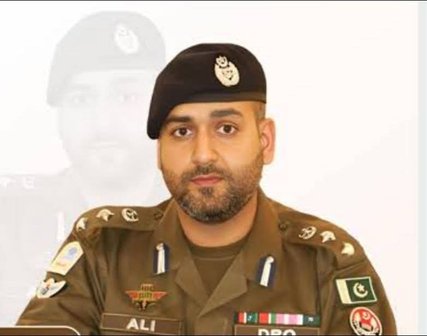
ISLAMABAD (Digital Posts) Across Pakistan’s administrative landscape, a troubling trend has taken hold: the elevation of publicity over performance. In an era dominated by social media appearances, press briefings and carefully choreographed photo opportunities, governance is increasingly reduced to a public relations exercise. Against this backdrop, the relatively quiet and low-profile approach of Attock District Police Officer (DPO) Captain (Retd.) Ali Bin Tariq offers a different perspective on leadership.
As DPO Tariq seeks to shift the district’s policing culture away from self-promotion and towards institutional discipline, his leadership faces a fundamental test: can administrative restraint translate into measurable improvements in public safety, impartial investigations and access to justice for ordinary citizens?
Commanding a district police force involves responsibilities that extend far beyond office discipline and personal integrity. Avoiding unnecessary publicity may be a welcome departure from the culture of self-promotion, but restraint in communication cannot, by itself, be considered an achievement. In law enforcement, a low-profile approach carries meaning only when supported by tangible results: declining crime rates, impartial investigations, professional conduct and freedom from political interference.
The recent resumption of open public forums, commonly known as Khuli Kachehri, in Fateh Jang after a gap of three months is an important step towards strengthening public access to senior police leadership. Such forums provide citizens with an opportunity to present grievances directly to the district police chief, potentially bypassing the administrative barriers that often prevent complaints from reaching senior officers.
However, the effectiveness of these gatherings should not be measured by the number of people attending or the announcements made during the proceedings. Their real value lies in what happens afterwards. How many complaints result in formal action? How many investigations are completed on merit? How many vulnerable citizens actually obtain relief instead of being referred from one office to another?
These are the questions that determine whether public engagement becomes meaningful accountability or merely another administrative exercise.
The success of any policing strategy also depends heavily on its implementation at the operational level. The responsibility does not rest with the DPO alone. DSP Fateh Jang Khan Shabbir, station house officers and other field personnel play an equally important role in translating the commander’s priorities into everyday policing practices.
For an ordinary citizen, the police station is often the first point of contact with the state. It should be a place where a complainant is heard without fear, where an investigation is conducted without prejudice, and where access to justice does not depend on political connections, personal influence or financial resources.
If citizens continue to believe that approaching a police station requires a powerful reference, institutional reform remains incomplete. Changing this perception requires continuous supervision, transparent complaint mechanisms, disciplinary action against misconduct and strict adherence to the law.
Attock Police must also operate within the broader governance framework of Punjab Chief Minister Maryam Nawaz Sharif, whose administration has repeatedly emphasised the provision of justice and public services at citizens’ doorsteps. Yet provincial policy directions can produce meaningful outcomes only when district-level leadership converts them into practical improvements.
Modern policing is ultimately built on public trust, professional competence, transparent investigations and equality before the law. These principles should guide the performance of every police station, regardless of its geographical location or the influence of the individuals involved in a case.
There is another important dimension to this debate: the relationship between police performance and public confidence. Crime statistics may provide an indication of operational progress, but they cannot tell the entire story. A reduction in reported crime must be accompanied by an environment in which citizens feel confident enough to register complaints without hesitation. Similarly, successful operations must be judged not merely by arrests but by the quality of investigation and the ability of the prosecution process to withstand judicial scrutiny.
This is where the real challenge for DPO Ali Bin Tariq begins. His low-profile approach may distinguish his style of administration, but the lasting value of his tenure will depend on whether that approach produces a police force that is more accessible, impartial and accountable.
Official titles and administrative postings are temporary. What remains is the institutional legacy a police commander leaves behind. The ultimate measure of leadership is not how frequently an officer appears in the headlines, but whether the ordinary citizen feels safer, receives a fair hearing and finds the law working without discrimination.
For Attock Police, the objective must be clear: to build an institution in which authority is exercised responsibly, complaints are addressed on merit and justice is not reserved for the influential.
*Because effective policing is not measured by the noise an institution makes about itself, but by the difference it makes in the lives of ordinary people.*