
ISLAMABAD (Digital Posts) Beyond Zero-Sum: Pakistan-China Relations and the Vision of a Shared Future in a Fractured World

Share
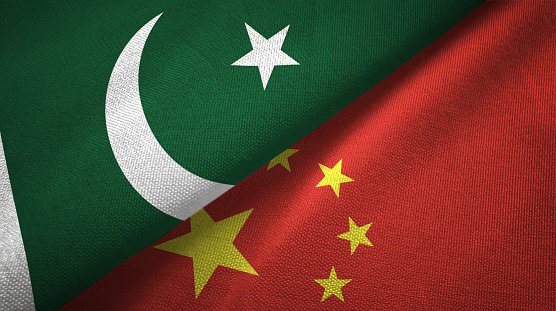

Written By Ms. Izza Khan, a Participant of ICSF-HU Fellowship Programme 2026-2027
ISLAMABAD (Digital Posts) This article argues that the contemporary international system is going through changes. Geopolitical rivalries, regional conflicts, economic inequalities and competition in technology are all shifting how countries interact. Even though globalization has brought economies and societies together it has not removed mistrust, uneven development or the drive for strategic influence. Many international issues like trade disputes and security crises are shaped by a mindset where one country’s gain is seen as another country’s loss. In this kind of environment the idea of building a community with a shared future for mankind raises a question: Can countries protect their own national interests while still helping create a more cooperative and peaceful world order?
The relationship between Pakistan and China offers an example to think about this question. Over the years the two countries have built a partnership that covers diplomacy, economic growth, security, education and technology. Their cooperation shows how countries can find goals and work toward mutual benefits even as the global situation changes. The value of this partnership should not be judged only by official statements or strategic agreements. Its real impact comes from whether it leads to term economic growth, improves everyday life and helps keep the region stable.
The concept of a community with a shared future for mankind promoted by China focuses on interconnectedness, common development, peaceful coexistence and joint action on problems. It says that no single country can solve world challenges alone. Issues like climate change, food shortages, health emergencies and risks from new technologies cross borders. Need cooperation among countries and communities. In this view international peace and security should not depend on power but also on the ability of nations to find areas where their interests match.
Yet a shared future does not mean giving up sovereignty or ignoring interests. International relations theory offers ways to understand cooperation. Realism stresses power, security and strategic goals. Liberal institutionalism points to interdependence, institutions and repeated cooperation as ways to reduce conflict and create benefits. The Pakistan-China relationship can be looked at through both lenses. Their strategic alliance shows shared security and diplomatic interests. Their economic ties show how cooperation can open up opportunities that go beyond state to state dealings.
Pakistan and China began diplomatic relations in 1951. Since then their relationship has grown through talks, economic projects and collaboration in regional and global issues. This
partnership has stayed strong despite changes in the region and shifts in the balance of power. In 2026 the two countries celebrated 75 years of ties. During Prime Minister Shehbaz Sharif’s visit to China in May they issued a statement reaffirming their commitment to deepen cooperation and build a stronger China-Pakistan community with a shared future. The statement also listed areas for collaboration, such as economic development, agriculture, digital technology, scientific innovation and education.
One of the visible parts of this partnership is the China-Pakistan Economic Corridor, a major part of China’s Belt and Road Initiative. CPEC has focused on energy, transport and connectivity— areas where Pakistan has long needed development. According to Pakistan’s CPEC Secretariat, the phase involved about $25 billion in Chinese investment and added nearly 8,000 megawatts of power generation. These numbers, reported by the government show the scale of the project and also stress the need to look at its longer-term economic impact.
Infrastructure can lay the foundation for growth. Its real benefits depend on how well it connects with economic activity. Roads, power plants and transport links can improve access. Reduce trade barriers.. Lasting development also needs competitive industries, skilled workers, strong institutions and access to markets. Without these infrastructure investments may not lead to prosperity for everyone. So the next stage of Pakistan-China cooperation offers a chance to go beyond building and connectivity and move toward development, innovation and stronger local involvement.
Recent steps show this possibility. In August 2026 Pakistan’s CPEC Secretariat listed industry, agriculture, minerals, technology, human resource development and business partnerships as priorities for the phase of CPEC. The joint statement in May 2026 also welcomed the completion of a training program in China for 1,000 Pakistani agricultural technicians. These actions show that cooperation can extend beyond infrastructure to include knowledge and skills.
Agriculture is especially important because it supports livelihoods, food security and economic activity in Pakistan. Cooperation in farming, water use, agricultural research and food processing could boost productivity and make Pakistani products more competitive. Industrial partnerships could bring jobs, skills and technology transfer. Collaboration in technologies and artificial intelligence could further support innovation as long as access to training and opportunities is not limited to a few institutions or companies.
These examples show the idea of gains. China can grow its presence and improve regional links while Pakistan can get investment, know how and access to larger markets.. A partnership only becomes a true example of a shared future when its benefits last and reach many people. Employment, support for businesses, environmental protection and local involvement should be seen as vital measures of progress.
The impact of Pakistan-China relations also goes beyond their two countries. In a world, regional progress depends partly on how well neighboring countries work together on trade, transport, energy and shared environmental issues. The May 2026 joint statement welcomed third-party involvement in CPEC under an agreement between Pakistan and China. If done
through arrangements and solid projects this could create chances for regional connectivity and trade. This kind of cooperation would be especially important if it encouraged dialogue and economic ties across divides.
Climate change is another area where the shared-future vision can become real. Pakistan faces floods, extreme heat, water shortages and other climate risks. Building resilience is a development goal. Cooperation in energy, climate smart farming, disaster response and water conservation could benefit both countries. These issues also show why international cooperation should not be seen through the lens of competition. Environmental threats cross borders. Cannot be solved by one country alone.
Still a fair look at the relationship must include its challenges. Economic sustainability is crucial especially when big projects need investment and long term relations. Pakistan must make sure that investments help create capacity, boost exports and fit with its overall economic goals. Success should be measured by results, not just announcements of investment.
Security is another concern. Attacks on workers and projects in Pakistan have shown the risks tied to economic cooperation. Protecting people and infrastructure is essential. Long term stability also depends on public trust, strong institutions and real engagement with local communities. Questions about jobs, environmental effects and how development benefits are shared also need attention. A project might help the economy but still have uneven results for different regions or groups.
These challenges do not mean the partnership has no value. They show what is needed for it to succeed. Transparency, accountability, good financial planning and independent reviews can build confidence and help cooperation meet long-term development goals. Pakistan and China must also remember that their relationship exists in an international system where other countries have their own interests. Moving past zero-sum thinking means being open to dialogue not assuming every strategic alliance must be against a party.
In the end Pakistan-China relations offer a chance to see both the promise and the real conditions of a community with a shared future for mankind. Their experience proves that shared strategic interests can lead to cooperation in infrastructure, agriculture, education, technology and regional links.. The durability and broader importance of their partnership will depend on the results it brings to ordinary people and on how well it helps create peaceful international relations.
For Pakistan the main goal should be to turn cooperation into industries, skilled jobs, stronger exports and inclusive development. For China the challenge is to help make sure bilateral projects deliver mutual benefits. For the world this relationship reminds us that cooperation and competition can coexist. Lasting progress needs dialogue, responsibility and respect for others’ interests.
A shared future does not mean a world without differences. It means recognizing that national wealth, human safety and global peace can support each other when countries work
responsibly on goals. In a world the true test of cooperation is not how strong the diplomatic words are or how large the investments are. It is how many countries turn shared dreams into improvements, in people’s lives and contribute to a more peaceful, fair and sustainable international order.
Sources
Ministry of Foreign Affairs, Government of Pakistan. “Joint Statement Between the People’s Republic of China and the Islamic Republic of Pakistan.” May 26, 2026.
https://mofa.gov.pk/press-releases/joint-statement-between-the-peoples-republic-of-china-and-t he-islamic-republic-of-pakistan-may-26-2026
China-Pakistan Economic Corridor Secretariat. “The 92nd CPEC Progress Review Meeting, Chaired by Federal Minister for Planning, Development & Special Initiatives.” Aug. 31, 2026. https://www.cpec.gov.pk/news/340
Waltz, Kenneth N. Theory of International Politics. Addison-Wesley, 1979.