


Fateh Jang (Digital Post) Eid Milad-un-Nabi ﷺ in Fateh Jang: Vigilant Guardians

Share
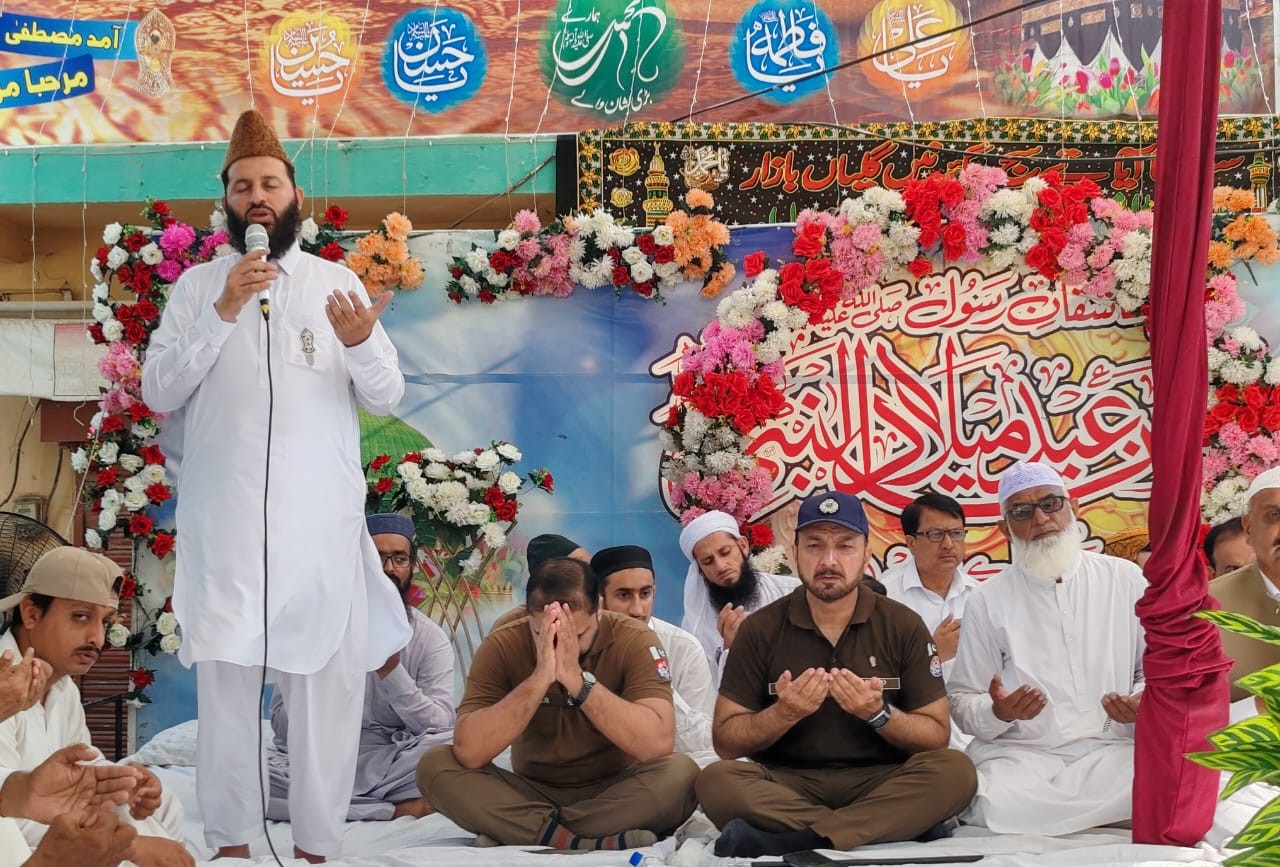
Fateh Jang (Digital Post) During the blessed days of Rabi-ul-Awwal, Fateh Jang is immersed in an atmosphere of devotion, love and Durood-o-Salam. Green flags flutter in the streets, roads glow with festive lights, mosques and Milad gatherings resonate with Durood-o-Salam, while the voices of Naat create a spiritual atmosphere that words can hardly capture.
Yet behind this beautiful spectacle lies another, quieter story — the story of those who do not merely take part in the celebrations, but assume the responsibility of ensuring that these sacred occasions continue in an atmosphere of peace, order and dignity.
Among these dedicated individuals, Khan Shabbir, Police Commander of Fateh Jang Circle, stands prominently. Under his supervision, the security arrangements for Eid Milad-un-Nabi ﷺ become far more than an official obligation; they become a practical expression of service, devotion to duty and public protection.
Comprehensive security arrangements have been put in place for Milad gatherings, processions and other religious activities. Tahir Iqbal Khan, SHO Fateh Jang, along with his police team, remains continuously engaged at different locations to ensure security, maintain order and facilitate the public.
On paper, all of this may simply be described as “official duty.”
But some responsibilities cannot be understood merely through titles, designations or files.
Behind them lies a journey of long working hours, physical exhaustion, personal sacrifice and an unwavering commitment to duty.
The police officer standing by the roadside during Eid Milad-un-Nabi ﷺ is one such silent story.
He is not seated inside the gathering.
He may not even hear the entire Naat.
He may never get the chance to admire all the lights and decorations illuminating the city.
Perhaps he may not even be able to share fully in the celebrations taking place at his own home.
Yet he remains there so that others may celebrate with peace of mind and a sense of security.
That is the true beauty of service.
Sometimes a person takes one step back from his own happiness in order to protect the happiness of others.
Rabi-ul-Awwal does not merely invite us to celebrate; it also reminds us of the profound teachings of the Holy Prophet Muhammad ﷺ — teachings founded upon mercy, compassion, noble character, dignity and service to humanity.
The fundamental purpose of policing is also to create an environment where people can live without fear, worship freely, travel safely and celebrate their moments of happiness with confidence.
When the people of Fateh Jang take to the streets with love and devotion, when families attend Milad gatherings with their children and elders, when processions pass through the city and when mosques and public spaces become centres of remembrance and Naat, ensuring their safety ceases to be merely an administrative exercise.
It demands constant vigilance.
It requires effective coordination.
And above all, it requires an uncompromising sense of responsibility.
That is why the deployment of police personnel, monitoring of routes, security around gatherings and continuous coordination under the supervision of Khan Shabbir are not simply operational arrangements. They are the unseen foundations of public peace upon which these celebrations rest.
The public sees the celebration.
The police sees the responsibility.
The public sees the lights.
The police watches the roads.
The public listens to the Naat.
The police listens to and assesses everything happening around them.
The public celebrates.
The police remains vigilant to ensure that the celebration which began in peace reaches its conclusion in the same spirit.
That is the difference between those who are protected and those who protect.
A person can celebrate without fear because somewhere nearby, another person has accepted the burden of vigilance.
The quiet service of the police personnel of Fateh Jang undoubtedly deserves appreciation, as does the responsibility carried by the commander overseeing them.
A good commander does not merely issue orders.
He feels the weight of responsibility for both his personnel and the public entrusted to their protection.
With the same spirit, SHO Tahir Iqbal Khan and his team are performing their duties throughout these blessed days with exceptional attentiveness and preparedness. Supervising personnel deployment, maintaining discipline around gatherings and processions, remaining in constant contact with officers in the field and preparing for any unforeseen situation require an officer to remain mentally and physically alert at all times.
This is not a responsibility for those who seek comfort.
It belongs to those who understand that when a city sleeps, the police remains awake — and when a city celebrates, the police must remain even more vigilant.
When people leave their homes to express their love for the Holy Prophet ﷺ, someone must also assume the responsibility of ensuring that they return safely to those homes.
That responsibility has been embraced by Khan Shabbir, Tahir Iqbal Khan and the police personnel serving under their command.
In the language of spirituality, perhaps the most beautiful definition of service is this: to make life easier and safer for another person without expecting recognition or praise in return.
A police officer clears a passage.
Perhaps no one thanks him.
He helps an elderly person safely cross through a crowd.
Perhaps that elder never even learns his name.
He reunites a frightened child with his family.
Perhaps the child forgets him the very next day.
But the value of service does not depend upon remembrance or applause.
Goodness does not need applause.
It needs sincerity.
And sincerity has the power to transform even the quietest responsibility into a profound act of human service.
The true spirit of Eid Milad-un-Nabi ﷺ likewise teaches us love, mercy, noble character and the creation of ease and comfort for others.
If we illuminate our streets, there should also be light in our character.
If we raise green flags, the colour of peace should also be visible in our conduct.
If we recite Durood, we should also become a source of comfort and ease for others.
Because love is not merely a claim made by the tongue.
Love reveals itself through character.
And service is perhaps the most beautiful practical expression of that love.
The services rendered by the police during the Milad celebrations in Fateh Jang quietly reflect this very truth.
Inside the gathering, Naat is being recited.
Outside, a police officer stands guard.
On one side is the sound of Durood.
On the other, instructions continue over the wireless set.
On one side, devotees raise their hands in prayer.
On the other, protectors remain watchful with their eyes wide open.
There is no contradiction in this.
These are simply two dimensions of the same scene.
One is devotion.
The other is responsibility.
And together, they create peace.
These blessed days too shall pass.
The lights will eventually be taken down.
The green flags will be gathered.
The gatherings will come to an end.
The processions will reach their destinations.
But the memory of these days will remain.
And if that memory is accompanied by the satisfaction that Fateh Jang celebrated the blessed birth of the Beloved of Allah ﷺ in an atmosphere of peace, security and dignity, then that will be a meaningful achievement in itself.
Behind that achievement will stand the supervision of Khan Shabbir, the practical leadership of Tahir Iqbal Khan and the tireless efforts of countless police personnel whose names may never make the headlines.
They may not stand at the centre of the gatherings.
But they certainly stand at the centre of their security.
They may not become part of the Naat.
But they protect the routes taken by those who recite it.
They may not light the lamps.
But they stand beneath those very lamps, guarding the peace that surrounds them.
Perhaps the most beautiful truth about a functioning society is that every individual may have a different role, yet the ultimate purpose remains the same — the welfare of others.
Some people celebrate.
Some protect the celebration.
Some recite Durood.
Some make the roads safe for those who recite it.
Some light the lamps.
And some stand beneath those lamps to ensure that peace prevails around them.
Together, these roles create a society.
On this blessed occasion of Eid Milad-un-Nabi ﷺ, tribute should be paid to every protector of Fateh Jang who has treated responsibility not merely as employment, but as a sacred trust.
Tribute to Khan Shabbir, under whose supervision the Fateh Jang Circle police continues to discharge its responsibilities with dedication and focus.
Tribute to Tahir Iqbal Khan, SHO Fateh Jang, who, together with his team, remains continuously engaged in ensuring effective security arrangements.
And tribute to every unnamed police officer and constable who continues to perform his duty through heat, fatigue and long hours while the city celebrates.
Because the happiness of a city becomes complete only when its people can celebrate with a profound sense of safety and peace of mind.
Perhaps this is where duty, service and love quietly meet.
Today, Fateh Jang carries the fragrance of Eid Milad-un-Nabi ﷺ.
There is sweetness in the sound of Durood.
There is light in the streets.
There is love for the Holy Prophet ﷺ in countless hearts.
And amidst this entire scene, a few quiet guardians stand carrying their own invisible lamps.
Their light may not be visible.
But it can be felt — in peaceful streets, in reassured families and in the sense of security with which people return to their homes.
Because sometimes the most beautiful expression of love is not to stand at the centre of a celebration, but to step one pace behind and ensure that someone else’s happiness remains safe.
This is service.
This is duty.
This is humanity.
And perhaps, in these blessed moments of Rabi-ul-Awwal, this is also a reflection of the message of mercy that the Holy Prophet Muhammad ﷺ brought to humanity.