
ISLAMABAD (Digital Post) Pakistan’s diplomacy for global and regional peace continues.

Share
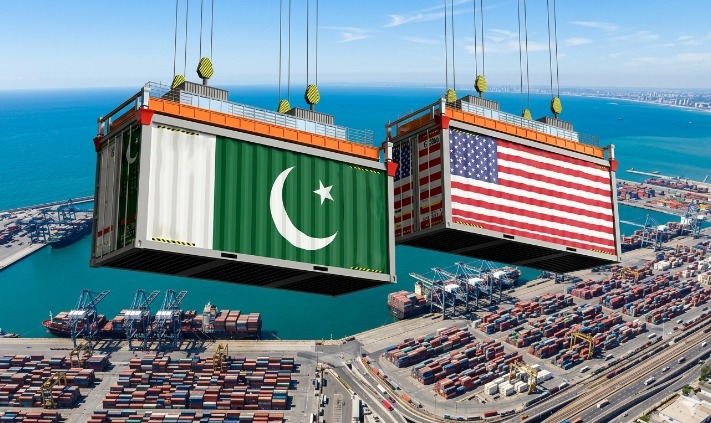
ISLAMABAD (Digital Post) Pakistan’s diplomacy for global and regional peace continues. Negotiations on a bilateral trade agreement between Pakistan and the United States are underway in Washington, D.C. According to Foreign Office Spokesperson Tahir Andrabi, the Pakistani delegation is led by Commerce Secretary Jawad Paul and includes the Foreign Office Spokesperson and other relevant officials. Representatives of various relevant ministries will also participate in the negotiations through an online virtual platform. The main goal of these talks is to resolve tariff issues and expand the Pak-US trade agreement, so that Pakistan’s economy can be protected from the negative effects of regional war tensions.
The ongoing tensions in the region and their impact on Pakistan are as follows:
Energy supply and prices:
The Middle East conflict and the closure of the Strait of Hormuz have led to a sharp increase in global oil and energy prices. Since Pakistan imports a large part of its energy needs from the Gulf countries (Saudi Arabia, the United Arab Emirates and Kuwait), the current crisis has adversely affected the country’s import bill and inflation.
Decline in exports and remittances:
The tensions in the region have led to a decline in economic activities in the Gulf Cooperation Council (GCC) countries. This situation has had a negative impact on the employment of Pakistanis working there and remittances sent to Pakistan. In addition, Pakistan’s exports to the Gulf states have also stagnated.
Diplomatic and Trade Strategy:
Pakistan has played a key role as a mediator between the US and Iran during the Middle East crisis. This active diplomatic role and constant contacts with Washington are aimed at promoting bilateral trade relations, obtaining relief from new US tariffs, and finalizing investment agreements in the IT and minerals sectors. The ongoing conflict in the Middle East has evolved from a regional political conflict into a global economic crisis. The conflict has destabilized the Middle East and disrupted Pakistan’s direct and indirect trade with the GCC countries and other regions. The crisis has put Pakistan’s external sector at risk, and the closure of the Strait of Hormuz could potentially reduce Pakistan’s direct exports to the GCC countries by $1.5 to $2 billion, while Pakistan’s imports from the GCC countries, especially energy, could fall by $3 billion. The latter could destabilize Pakistan’s domestic production and global exports. At the same time, high energy prices would increase Pakistan’s import bill by $4.5 billion and increase Pakistan’s current account deficit and external debt. The crisis could also worsen Pakistan’s balance of payments by reducing export earnings and remittance inflows, thus putting further pressure on reserves. Moreover, the border trade situation with neighboring countries is already tense, and the ongoing war in the Middle East would reduce Pakistan’s border trade with Iran. High oil prices also signal a return to double-digit inflation, reversing the stabilization achieved during FY25. To mitigate these risks and maintain robust energy supplies, the study suggests that Pakistan should re-route oil imports to the Yanbu port in the Red Sea. Pakistan also needs to diversify its oil imports and leverage CPEC 2.0 as a strong alternative trade market. These measures are important to absorb external shocks. According to the Foreign Office Spokesperson, the aim of the negotiations is to further promote trade relations between Pakistan and the United States, increase facilitation in mutual trade, and explore new opportunities for bilateral economic cooperation. The Foreign Office Spokesperson said that Pakistan will continue to play a mediating role. Deputy Prime Minister Ishaq Dar held meetings with the foreign ministers of Saudi Arabia, China, Bahrain, and Iran, continuing the series of high-level diplomatic consultations.
Following US President Donald Trump’s recent statement that the Islamabad Memorandum of Understanding (MoU) due in June 2026 is now over, global markets are in deep uncertainty. The following is an analysis of this delicate geopolitical situation, the market reaction, and the real economic drivers at work behind the scenes:
The question is: is the deal really dead, or should the focus be elsewhere? The deal is in deep crisis at the diplomatic level, but it would be premature to declare it completely dead.
President Trump announced the termination of the Interim Deal on July 6 and 7 after Iranian attacks on commercial ships in the Strait of Hormuz and US retaliation. However, the very next day he clarified that the aim of this exchange of fire was not a long-term war. Pakistan’s position: Pakistan’s Foreign Ministry has urged all parties to abide by the Islamabad Agreement, as it is the only basis for lasting peace in the region. The real focus: What matters to the markets is not just the text of the agreement, but the continuation of trade recovery. If the two countries continue to negotiate behind the scenes, the markets can recover.2. The Strait of Hormuz: The Silent and Powerful Driver of Global Financial Conditions. Yes, the Strait of Hormuz has become the world’s most powerful geo-economic driver. Traditionally, central banks (such as the US Federal Reserve) control the global economy through interest rates, but now the situation in the Strait of Hormuz is directly affecting global monetary policy:Energy Shock: A third of the world’s seaborne gas and petroleum products pass through this route. When Iran closed the strait in February 2026, it paralyzed the global supply chain and set off a new wave of inflation. Insurance Pressure: The conflict has caused insurance rates on ships to rise so much that commodity prices around the world automatically become more expensive even before the effects of central banks’ monetary policy.3. Who is setting the direction of the markets now? In the current situation, Wall Street or central bank governors are not deciding the direction of the market, but the geopolitical risk premium is driving the markets. Control has been taken away from central banks. In the past, central banks used to take control of the market with a word, but now every new conflict already “tightens” monetary conditions. Uncertainty in oil prices forces banks to keep interest rates high to prevent inflation, even if the economy is slowing down. Two parallel engines of market direction: Markets are currently swinging between two major factors: Political risks: War or peace in the Middle East (such as the future of the Islamabad agreement). Technology catalysts: Strong investment in the artificial intelligence (AI) cycle and spending on data centers, which, despite this geopolitical pressure, are keeping US and Asian stock markets from falling. Summary: Markets are no longer waiting for a central bank statement, but are determining their direction by watching the number of oil tankers passing through the Strait of Hormuz and President Trump’s statements.