

ISLAMABAD (Digital Post) Pakistan PM’s new proposals to Iran to end the war

Share
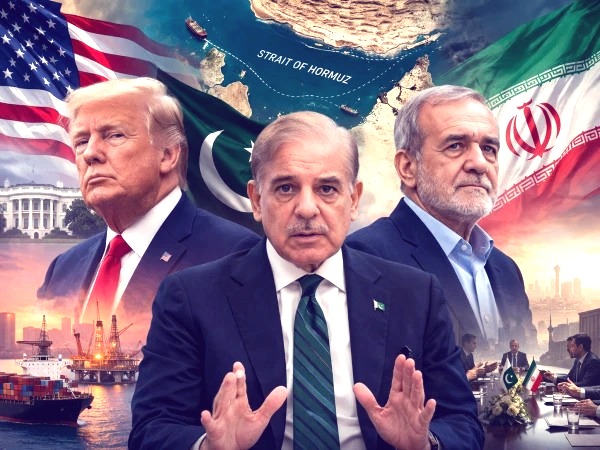
ISLAMABAD (Digital Post) A new breakthrough has emerged in the mediation of Prime Minister Shehbaz Sharif to end the ongoing war between Iran and the United States.
The ongoing war between Iran and the United States is having a serious impact on the Pakistani economy, due to which the country’s oil import bill has reached a record level.
Prime Minister Shehbaz Sharif stated that the ongoing conflict between Iran and the United States has severely impacted the Pakistani economy, particularly causing a 167 percent increase in the country’s weekly oil import bill—from $300 million to $800 million. He explained this during a federal cabinet meeting, emphasizing that rising global oil prices pose a significant challenge for Pakistan. The Prime Minister shared that Pakistan is actively working to end the conflict and restore peace, noting that recent diplomatic efforts led to an extension of the ceasefire. Pakistan has sent proposals to Iran, and Iran is expected to respond after internal consultation. These proposals focus on reopening the Strait of Hormuz, delaying nuclear talks to prioritize a ceasefire, ending the US naval blockade, and establishing temporary and permanent ceasefire guarantees. Islamabad now hosts direct negotiations as part of the ‘Islamabad Talks,’ with the goal of reaching a comprehensive peace deal and stabilizing the Middle East.
The most recent diplomatic progress includes 21 hours of direct talks between Iran and the United States, held on April 11 and 12, 2026, in Islamabad. Prime Minister Shehbaz Sharif called this the first face-to-face meeting between the sides since 1979 and described it as a historic step toward peace.
Exchange of Written Proposals: After the face-to-face talks, the parties have now entered the stage of exchanging written texts, which marks a more serious and final phase of the talks.
Key points of the comprehensive settlement for the second round of talks in Islamabad. Both sides have presented their respective conditions to Pakistan.
Iran’s 10-point plan:
Iran has made demands such as monitoring the Strait of Hormuz, withdrawal of US forces from the region, lifting of all sanctions, and restoration of frozen assets.
US’s 15-point plan:
The US plan includes ending Iran’s nuclear program, banning missiles, and fully opening the Strait of Hormuz to international shipping.
Pakistan’s key role as mediator:
Prime Minister Shahbaz Sharif, Field Marshal Asim Munir, and Ishaq Dar are actively conveying messages between Washington and Tehran through “shuttle diplomacy”.
Ceasefire extended: At Pakistan’s specific request, President Trump extended the ceasefire so that diplomatic efforts in Islamabad could reach their logical conclusion. Although no final agreement has been reached yet, Islamabad is hopeful that these talks will lead to a “permanent peace agreement.” Prime Minister Shehbaz Sharif has said that the joint US-Israeli war on Iran and Tehran’s retaliation have put pressure on the economy of the region, including Pakistan, but with timely help from Saudi Arabia, the government has been able to withstand the “financial shock.” The war, which began on February 28, has led to severe tensions in the Middle East. The conflict has disrupted global trade and energy supplies, especially since the closure of the Strait of Hormuz has raised oil prices and import costs for countries like Pakistan, which are heavily dependent on fuel imports. Pakistan has also defaulted on external debt, including $1.4 billion in Eurobonds and $2 billion in UAE bonds, amid concerns over foreign exchange reserves.
The prime minister said, “Allah Almighty had kept our economy at a macro level, and we were on the path to recovery, but as a result of this sudden war, our efforts of the last two years have been undermined.”
He further said that “fuel prices have increased rapidly in the global markets, due to which Pakistan’s weekly oil bill has increased from around $300 million to $800 million.” He also said that the federal government is to fix new prices on Friday. It is being speculated that the government is going to increase the prices of petroleum products in the next few days. The cabinet was told that the country’s fuel consumption had “decreased compared to the previous weeks.” However, he said that the situation is being monitored regularly and the provinces are also being consulted to increase fuel subsidies. Prime Minister Shahbaz Sharif once again appreciated the efforts of Field Marshal Asim Munir and said that despite many challenges and difficulties during the Iran-US talks in Islamabad, Field Marshal Asim Munir did not give up, and thus, the extension of the ceasefire was possible. As a result of the talks held between Iran and the US in Islamabad on April 11 and 12, the extension of the ceasefire for the already ongoing two weeks was also possible. In this regard, the Prime Minister also praised the efforts of Deputy Prime Minister and Foreign Minister Ishaq Dar. Member states of the International Energy Agency (IEA) unanimously agreed to make 400 million barrels of oil available on the market from their emergency reserves to help ease disruptions to oil markets caused by the war in the Middle East. The IEA, which includes 32 countries, including the United States and Britain, advises developed, oil-consuming countries on energy security and sustainability. According to a statement on the intergovernmental agency’s website, the decision to take emergency collective action was made yesterday after an extraordinary meeting of IEA member governments, convened by the IEA’s executive director to review market conditions amid the conflict in the Middle East and consider options to address supply disruptions. “The oil market challenges we face are unprecedented in scale, so I am delighted that IEA member states have responded with an unprecedented scale of emergency collective action,” said IEA Executive Director Fatih Birol. The conflict in the Middle East that began on February 28 has disrupted oil flows through the Strait of Hormuz, with crude and refined product exports currently at less than 10 percent of pre-conflict levels. This is forcing operators across the region to shut down or reduce significant amounts of production. “In 2025, an average of 20 million barrels per day of crude oil and oil products passed through the Strait of Hormuz, or about 25 percent of the world’s seaborne oil trade. Options for oil flows to bypass the Strait of Hormuz are limited,” the statement said. The IEA Secretariat will provide further details on how this collective action will be implemented in due course. It will also continue to closely monitor global oil and gas markets and provide recommendations to member governments as needed. The International Energy Agency (IEA) is an independent intergovernmental organization based in Paris that was established in 1974 to ensure reliable, affordable, and clean energy. Originally created to manage disruptions in oil supplies, the agency now advises member countries on energy security, economic development, and the global clean energy transition. Pakistan’s Permanent Representative to the United Nations, Asim Iftikhar, has said that the situation in the Strait of Hormuz is negatively affecting Pakistan as well as other countries in the world. He said this during a discussion on the recent situation in the Middle East in the United Nations Security Council. Since the beginning of the war between the US and Iran, the closure of the Strait of Hormuz has been a problem for countries around the world, including Pakistan. Due to the closure of the Strait of Hormuz, where oil is facing shortages, prices are also increasing. In view of this, the Pakistani government also had to take some difficult decisions. Initially, Iran closed the Strait of Hormuz, but later the United States also began its blockade. Speaking about this in the United Nations Security Council, Pakistan’s permanent representative said that ‘broader regional tensions are creating serious threats to international peace and security as well as global economic stability.’ Asim Iftikhar said that ‘the situation in the Strait of Hormuz is negatively affecting countries around the world, including Pakistan.’ He also said that ‘Pakistan reiterates its full support for the sovereignty, territorial integrity, and political independence of all brotherly countries in the region.We support universal respect for international law and peaceful resolution of disputes. Asim Iftikhar, referring to the talks between the US and Iran in Islamabad, said, “At this critical juncture, patience, dialogue, and diplomacy must prevail.” Pakistan is playing an active role in advancing such diplomatic channels and supporting a peaceful resolution of this crisis. He said, “The recent talks between the US and Iran in Islamabad are a testament to this commitment. Pakistan will continue to support and facilitate efforts to promote dialogue and stability in the region.” A round of talks between the US and Iran took place in Islamabad earlier this month, while preparations were made for a second round, but Iran refused to participate. After this, the Iranian Foreign Minister visited Islamabad twice in about three days last week and informed Pakistan of his proposals. The Gulf Cooperation Council (GCC) consultative meeting held in Jeddah reviewed the regional situation regarding the growing tension in the region and demanded the restoration of the Strait of Hormuz. The statement issued after the meeting condemned the Iranian attacks on the GCC and Jordan. The GCC meeting was chaired by Saudi Crown Prince Mohammed bin Salman and was attended by the heads of state of the Gulf Cooperation Council member states. In a statement issued by the GCC, Secretary General Jassim Al-Badawi said that the heads of state discussed the current regional situation, especially tensions in the region, Iran’s open attacks on the Council countries and Jordan, and ways to establish diplomatic channels to end the crisis. Jassim Mohammad Al-Badawi said that the meeting completely rejected Iran’s illegal actions, such as closing the Strait of Hormuz, obstructing shipping, endangering its security, or imposing fees under any name on ships passing through it. He stressed that security and freedom of navigation in the Strait of Hormuz should be restored, and the situation should return to the state it was in before February 28, 2026. He added that the Gulf leaders appreciated the invitation by the Saudi leadership to convene the meeting, which reflects the determination to strengthen the unity among the Council countries and adopt a common position to address the challenges facing the region. Jassim Mohammed Al-Badawi clarified that ‘the Gulf leaders strongly condemned Iran’s open attacks on the Council member countries and Jordan, which targeted civilian installations and infrastructure and caused loss of life and property. He called these attacks a ‘serious violation of the sovereignty of the Council countries, the United Nations Charter, and international law’. The Gulf Cooperation Council (GCC) countries have said that they have faced more attacks from missiles and drones launched by Iran than from Israel. The Saudi Press Agency reported that 83 percent of the missiles and drones launched by Iran were aimed at GCC countries, while 17 percent were aimed at Israel. It said that these attacks targeting critical infrastructure and civilian installations in the Gulf countries have reached a dangerous intensity, threatening regional security and stability. “The total number of weapons launched has reached 4,391. In contrast, Israel, which is directly attacking Iran, has been hit by 930 missiles and drones, which accounts for only 17 percent of the total regional attacks. The figures show that the intensity of these attacks is increasing. The SPA report said that 723 missiles and drones have been launched against Saudi Arabia since the beginning of the conflict. While 2,156 attacks were carried out on the UAE, 429 on Bahrain, 791 on Kuwait, 270 on Qatar, and 22 on Oman. Gulf air defense systems have demonstrated exceptional efficiency and professionalism in thwarting these threats and have proven themselves to be an impenetrable shield that safeguards the security and stability of the region. The Gulf Arab countries have also said that these attacks targeting them are a clear violation of international humanitarian law and its customary principles, and pose a direct threat to the global economy and international energy security. Six Arab states, including Saudi Arabia, said in a joint statement that Iran’s recent attacks are a clear violation of their sovereignty and territorial integrity. Saudi Arabia, Kuwait, the United Arab Emirates, Bahrain, Qatar, and Jordan said that such attacks, “whether carried out directly or by Iranian-backed groups,” are a clear violation not only of international law but also of international humanitarian law and the United Nations Charter. In response to the attacks launched by the United States and Israel on February 28, Iran launched attacks on Israel as well as Saudi Arabia, the United Arab Emirates, Kuwait, Qatar, and Bahrain in the Middle East.