

ISLAMABAD (Digital Post) Welcome Back, Babar Sarfraz Alpa

Share
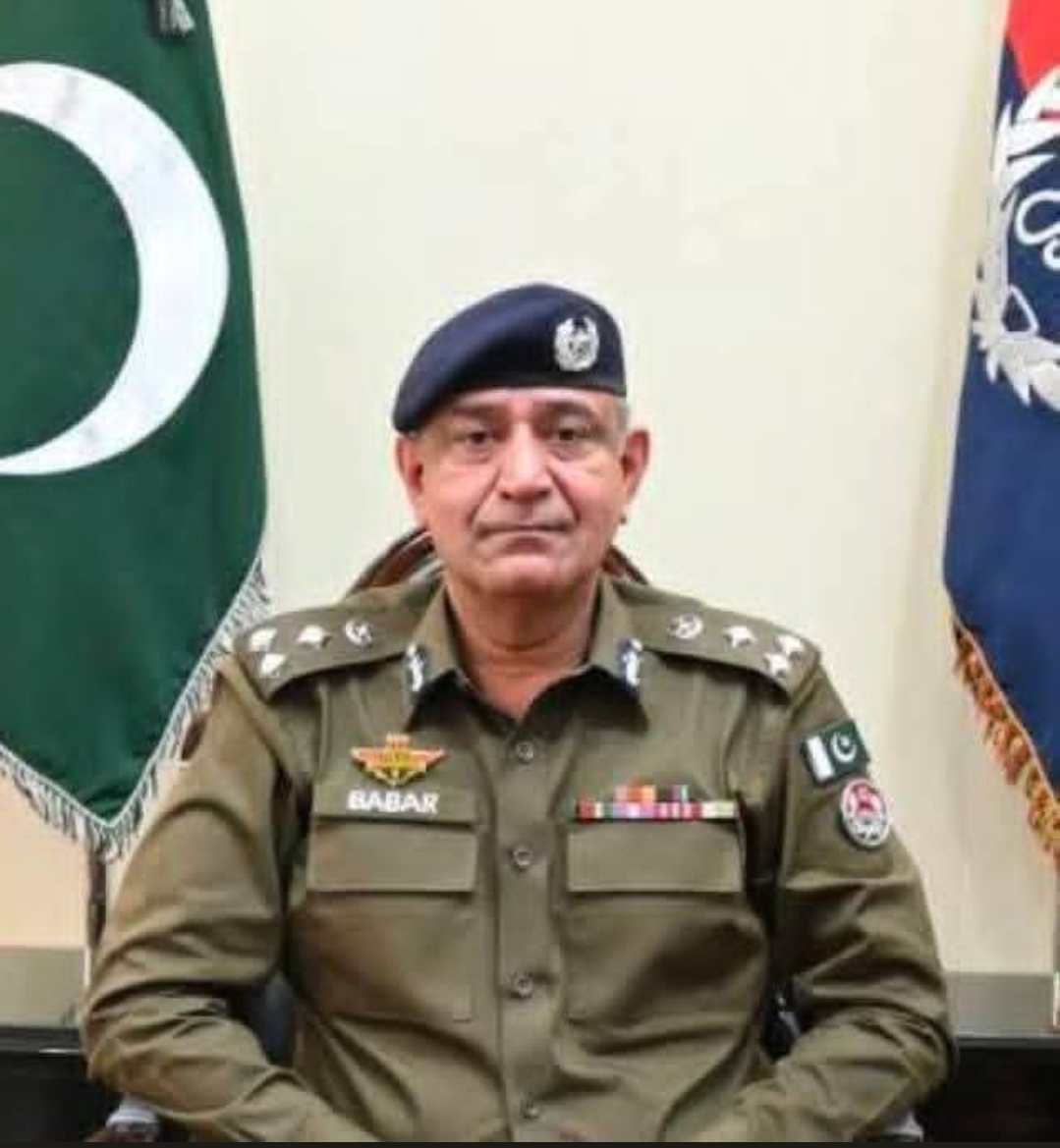
ISLAMABAD (Digital Post) There are officers who merely occupy positions, and there are those who come to define them. Their presence travels beyond official notifications and office walls; it settles into the institutional memory of a region. They become symbols of command, discipline, and operational certainty. In Pakistan’s increasingly fragile law-and-order environment, such officers are rare. Babar Sarfraz Alpa belongs to that diminishing category of field commanders whose return to office restores confidence not only within the ranks of the police force but also among ordinary citizens who still expect the state to assert its writ with clarity and resolve.
The Punjab government’s decision to reappoint Babar Sarfraz Alpa as Regional Police Officer Rawalpindi after the completion of his course is far more than a routine bureaucratic reshuffle. For Rawalpindi Division, it signals the return of a commander known for operational discipline, field presence, and a command structure that values action over ceremony.
Rawalpindi is not an ordinary administrative division. It is one of Pakistan’s most strategically sensitive regions, where policing demands far more than paperwork and ceremonial oversight. The division sits at the intersection of security sensitivities, urban expansion, organized criminal networks, and high-pressure operational responsibilities. In such an environment, leadership is tested not in conference rooms but in moments of uncertainty, where quick judgment, psychological composure, and command authority determine whether the system holds its ground or retreats into paralysis.
What has consistently distinguished Babar Sarfraz Alpa from many contemporary officers is his reputation as a field-oriented commander. In Pakistan’s policing culture, too many senior officials gradually become confined to offices, surrounded by files, briefings, and carefully managed appearances. But institutions draw strength from officers who remain connected to the ground. Leadership in uniform cannot survive on administrative detachment alone. A force performs differently when it knows its commander is present, informed, and operationally engaged.
That sense of command presence has long been associated with Alpa’s tenure. Officers who worked under him often describe an environment where accountability was visible and operational readiness was not reduced to slogans. In policing, morale is not built through speeches; it is built through certainty. A constable standing at a checkpoint, a station officer conducting a raid, or a patrol team responding to a threat performs with greater confidence when the chain of command is active and decisive.
The true strength of a police force lies not merely in weapons, vehicles, or numerical capacity. Its real strength lies in command and control. Once leadership weakens, hesitation spreads through the ranks with alarming speed. Operational confusion replaces confidence, and criminal elements quickly sense the vacuum. But when leadership is firm, visible, and disciplined, the institution regains its posture. That has been one of the defining perceptions surrounding Babar Sarfraz Alpa’s previous tenure in Rawalpindi Division.
There are officers who rely heavily on rhetoric and visibility, and there are those who prefer operational silence backed by decisive action. Alpa’s professional image has largely reflected the latter. His style has never depended on unnecessary theatrics or public grandstanding. Instead, his reputation rests on structured command, rapid response mechanisms, and a policing philosophy rooted in visible state authority.
In military terminology, command presence is often described as the invisible force that stabilizes an entire formation. It is the ability of a commander to project confidence under pressure and clarity during uncertainty. Institutions facing constant operational stress require precisely that quality. Pakistan’s policing system, stretched by urban pressures, evolving criminal tactics, narcotics networks, and public distrust, cannot afford passive leadership.
Rawalpindi Division presents unique operational complexities. It requires coordination, situational awareness, and an uninterrupted readiness posture. Criminal networks adapt quickly in environments where enforcement weakens even temporarily. Effective policing in such a region demands an officer capable of integrating intelligence, mobility, surveillance, and field operations into a coherent operational grid. Alpa’s professional reputation suggests familiarity with precisely this model of command.
One of the most important aspects of modern policing is psychological dominance. Criminal enterprises thrive when they believe the state lacks the will to respond. Conversely, even limited resources can become highly effective when backed by visible institutional resolve. During Alpa’s earlier tenure, one recurring impression was that law-enforcement visibility had regained operational sharpness. The message to criminal elements appeared unambiguous: the state was watching, present, and prepared to respond.
This is particularly important in Pakistan, where public confidence in institutions has steadily eroded over the years. Citizens no longer expect perfection from state institutions; they simply want consistency, responsiveness, and visible authority. They want a police system that appears awake rather than ceremonial. That is why the return of officers with a reputation for operational seriousness often generates genuine public relief.
Another defining characteristic of effective commanders is emotional steadiness under pressure. Modern policing is no longer confined to conventional street crime. Officers now confront layered challenges involving digital crime, organized narcotics operations, rapid urban disorder, and increasingly unpredictable security situations. Such realities require leadership that remains composed during operational stress rather than reactive or impulsive. By most professional accounts, composure has remained one of Alpa’s strongest attributes.
There is also a deeper institutional dimension to such appointments. Police organizations, like military formations, draw energy from competent leadership. When officers at the top project clarity, professionalism, and operational discipline, the effect gradually travels downward through the ranks. A disciplined command structure reduces uncertainty and restores confidence within the institution itself. In fragile administrative environments, this internal confidence becomes critical.
The symbolism of uniformed authority also matters. A uniform is not simply official clothing; it represents the state’s capacity to maintain order, enforce law, and reassure citizens. Some officers wear rank as entitlement, while others carry it as responsibility. The difference becomes visible in moments of operational challenge. Babar Sarfraz Alpa’s image has largely been shaped by the latter approach — command through discipline rather than display.
His return to Rawalpindi Division therefore carries expectations far beyond administrative management. People expect operational alertness, institutional discipline, and visible enforcement. They expect a command structure capable of restoring confidence at a time when public trust in institutions remains dangerously fragile.
Of course, no individual officer can single-handedly transform a deeply stressed policing system. Structural reform requires continuity, political will, institutional insulation, and long-term investment. Yet leadership still matters immensely. Strong commanders can temporarily restore coherence even within weakened systems. They can raise morale, sharpen operational focus, and re-establish institutional rhythm.
That is perhaps why Babar Sarfraz Alpa’s return has been received with unusual optimism. In an era where public expectations from institutions have steadily diminished, the reappearance of an officer associated with operational discipline and field command inevitably stands out.
Rawalpindi has once again been placed under the command of an officer widely regarded as a field-oriented professional rather than a ceremonial administrator. And in environments shaped by uncertainty and pressure, institutions survive not merely through systems, but through the strength of the commanders who stand at the front of