Islamabad (Digital Post) — The recent statement by the Chinese Society of International Law, in which adherence to international law and condemnation of the unlawful use of force has been emphasized, comes at a time when the world stands at a very critical juncture. The global order, which was established after World War II on the basis of the United Nations Charter, is now under severe pressure, and its fundamental principles are being openly challenged.
The attacks carried out by the United States and Israel on Iran in the Middle East are a clear example of this crisis. Article 2(4) of the United Nations Charter prohibits the use of force against the sovereignty and territorial integrity of states. However, the recent military actions reflect a deviation from this principle, which has not only increased tensions in the region but has also weakened the status of international law.
The large-scale attacks against Iran in February 2026 have further worsened the situation. Targeting civilian areas, hospitals, schools, and energy facilities is a clear violation of international humanitarian law. Such actions are not only illegal but also a challenge to the global conscience.
This issue is no longer limited to a single region but has now become a test for the global system.
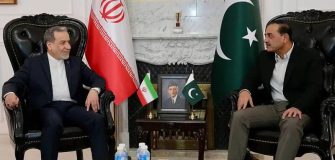
In such sensitive circumstances, Pakistan’s role has been prominent and commendable. Pakistan has adopted a balanced and responsible strategy, presenting itself as a neutral mediator. The holding of negotiations in Islamabad, restoration of communication between the parties, and efforts for a ceasefire are proof that Pakistan has played a serious role in establishing peace through diplomacy.
Pakistan’s hosting of indirect talks between Iran and the United States is a sign that both parties trust Pakistan. This trust is not a coincidence but reflects Pakistan’s balanced foreign policy and regional importance.
Pakistan’s geographical position, its border with Iran, its relations with Gulf countries, and its diplomatic ties with the Western world give it a unique standing. This is why Pakistan is among the few countries capable of engaging with all parties simultaneously.
However, the real issue is not just mediation but the restoration of international law.
If powerful countries continue to take unilateral actions outside the framework of the United Nations, it will create imbalance in the global system, where power will replace law. The statement by the Chinese legal body highlights this danger and warns the international community to stop this approach.
For Pakistan, this situation is both a challenge and an opportunity.
On one hand, it faces internal pressure and regional sensitivities; on the other, it has the opportunity to establish its reputation globally as a responsible and effective mediator. If Pakistan continues its diplomatic efforts with consistency and seriousness, it can not only contribute to peace in the region but also enhance its global importance.
The path forward lies only in dialogue and tolerance. The United States and its allies must understand that military power cannot replace legal justification. Iran must also show seriousness in continuing the diplomatic process. And the international community must collectively uphold the principles that form the foundation of global peace.
Ultimately, the world faces a clear choice: the rule of law or the rule of power.
Pakistan’s mediation gives hope that a path to peace still exists. The question is whether major powers are ready to adopt this path or not.
If not, the consequences will not remain limited to one region but the entire global system will have to pay the price.