

Islamabad (Digital Post) Possible efforts for a ceasefire


Islamabad (Digital Post) According to details, U.S. President Donald Trump has announced postponing all attacks on Iran’s power plants, energy installations, and even Tehran for five days, stating that he is pleased to share that over the past two days, very positive, productive, and constructive talks have taken place between the United States and Iran regarding a complete and comprehensive resolution of the ongoing tensions in the Middle East. Speaking to the media later, Trump said regarding Iran that it will never acquire nuclear weapons and that they have agreed to this. He said Iran itself reached out because it did not want the U.S. to target its energy infrastructure. They want a deal, and we are fully ready for a deal.
Trump said that Special Envoy for the Middle East Steve Witkoff and his son-in-law Jared Kushner were involved in the talks. If matters are resolved, the Strait of Hormuz will soon be opened, and as soon as the agreement is finalized, oil prices will drop sharply. He said that in his view, agreement exists on key points, in fact on almost all points. The U.S. President stated that a five-day period has been set, and they will see how it goes; if everything goes well, the matter will be resolved, otherwise they will continue bombing with full force.
The U.S. President also claimed that both countries are discussing 15 points to end the war, with Iran’s renunciation of nuclear weapons being the first, second, and third points. However, he said he cannot guarantee an agreement with Iran. Meanwhile, Iran’s Parliament Speaker Mohammad Baqer Qalibaf stated that no talks have taken place with the United States, calling such reports fake news intended to influence the oil market. However, Iran’s Ministry of Foreign Affairs has confirmed that efforts are underway to reduce tensions between the U.S. and Iran.
On the other hand, Russia has emphasized finding a political and diplomatic solution to the ongoing conflict in the Middle East. Kremlin spokesperson Dmitry Peskov, while speaking to journalists in a press conference, said that the parties should move toward a political and diplomatic solution to normalize the complex situation caused by the war.
Prime Minister Shehbaz Sharif, in a telephone conversation with Iranian President Dr. Masoud Pezeshkian, emphasized the urgent need to reduce tensions among all neighboring countries and to return to dialogue and diplomacy to resolve differences peacefully. He also stressed the importance of unity and solidarity among the Muslim Ummah, which is greatly needed at this time. Informing the Iranian leadership about Pakistan’s diplomatic efforts, the Prime Minister assured that Pakistan will continue to play a constructive role in promoting peace in the region.
The war between the United States and Israel against Iran had reached an extremely dangerous level, becoming one of the most serious global confrontations of the present era and a nightmare for peace and stability in the Middle East as well as for the global economy. It is a matter of relief that in the current serious situation, signs of a pause are emerging and voices of ending the war are being heard among the conflicting parties. The announcement by U.S. President Donald Trump to postpone attacks on Iran’s power plants, energy installations, and Tehran for five days can be described as a breath of fresh air in a dangerous environment.
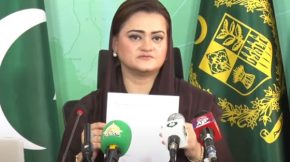
According to reports, this development has been made possible as a result of behind-the-scenes diplomatic efforts. In this regard, the efforts of Pakistan, Türkiye, and Egypt are being considered important. Pakistan is presenting itself as a central mediator in ending the war between the U.S. and Israel against Iran, and is gaining this role based on contacts between its military leadership and Tehran, as well as close relations with Donald Trump.
According to a report by the British newspaper Financial Times, two officials familiar with the negotiations said that Pakistan has offered Islamabad as a venue for talks. In the coming days, senior officials from the Trump administration and Iran are expected to participate in a meeting there. According to them, Pakistan’s Army Chief and Field Marshal Asim Munir contacted U.S. President Trump on Sunday, while Prime Minister Shehbaz Sharif spoke with Iranian President Masoud Pezeshkian on Monday. This communication between Pakistani and Iranian leadership took place almost at the same time as Trump announced postponing his threat to destroy Iran’s power plants, saying the decision came after very good and productive talks with Tehran.
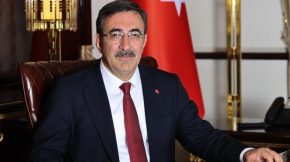
The White House has refused to provide details of Trump’s negotiations, stating that these are sensitive diplomatic discussions and that the U.S. does not negotiate through the media. Türkiye, which was involved in mediation efforts before the war, is in contact with Iranian officials and Trump’s envoy Steve Witkoff to make a short ceasefire possible and pave the way for negotiations.
The ball is now in the court of both the United States and Iran, and it depends on their leadership whether they prioritize negotiations for a ceasefire or expand the scope of the war, increasing global difficulties. It cannot yet be said with certainty whether the pause in hostilities will be temporary or will continue. At a time when the war has entered its fourth week, it is difficult to expect immediate success from any mediation efforts. Current diplomatic efforts are still limited to the exchange of initial messages, and no formal negotiation process has yet taken place.
Several countries are trying to de-escalate the conflict. Türkiye, Egypt, and Pakistan have been playing a role in communication between the U.S. and Iran over the past two days to reduce tensions. Mediating countries are attempting to arrange a meeting in Islamabad, where Iran may be represented by Parliament Speaker Mohammad Baqer Qalibaf and other officials, while from the U.S. side Steve Witkoff, Jared Kushner, and possibly Vice President Vance may participate. This meeting is expected by the end of the week.
Defense and diplomatic experts say that the U.S. President’s announcement to delay attacks on Iran for five days was influenced by pressure from America’s allies, particularly Gulf countries. Following Trump’s 48-hour warning regarding the Strait of Hormuz, Iran also signaled potential attacks on power and water plants in the Gulf, which alarmed Gulf nations.
The key question now is whether the objectives of U.S. aggression against Iran have been achieved, and whether Donald Trump will be able to secure a face-saving exit from the current difficult situation. It cannot be denied that the U.S. has neither succeeded in regime change in Iran nor in subduing it. On the contrary, over the past four weeks, Iran’s leadership and people have demonstrated remarkable resilience.
Now the question arises: what will happen after five days? Will the attacks stop or resume? And will the United States accept the situation quietly? The answer appears negative. It seems that this temporary pause by President Donald Trump is the result of circumstances, and the U.S. may resume action under a new strategy.
Another view is that the U.S. did not receive significant support in this war, as the international community did not back Trump’s approach. Gulf countries have also realized that the U.S. and Israel may be trying to create divisions among them. Despite suffering heavy economic and defensive losses due to Iranian actions, they have so far shown restraint instead of reacting aggressively.
Pakistan had also played a bridging role between the U.S. and Iran in June last year, contributing to a ceasefire, and once again, in the current situation, the diplomatic efforts of Pakistan’s political and military leadership for peace among brotherly countries in the region are commendable and crucial in limiting the conflict.
If the conflicting parties move toward dialogue even now, it will be a positive development, as extinguishing the fire in the Middle East is not only in the interest of regional countries but of the entire Muslim Ummah. The Iranian leadership will also need to adopt a more realistic approach in the current difficult situation rather than an emotional one. On the other hand, the survival and stability of Gulf countries depend on mutual cooperation and recognizing their common challenges.