
ISLAMABAD (Digital Post) Pakistan “Center of Peace” Iran, US conflict; Diplomacy fast, contacts with important countries.

Share
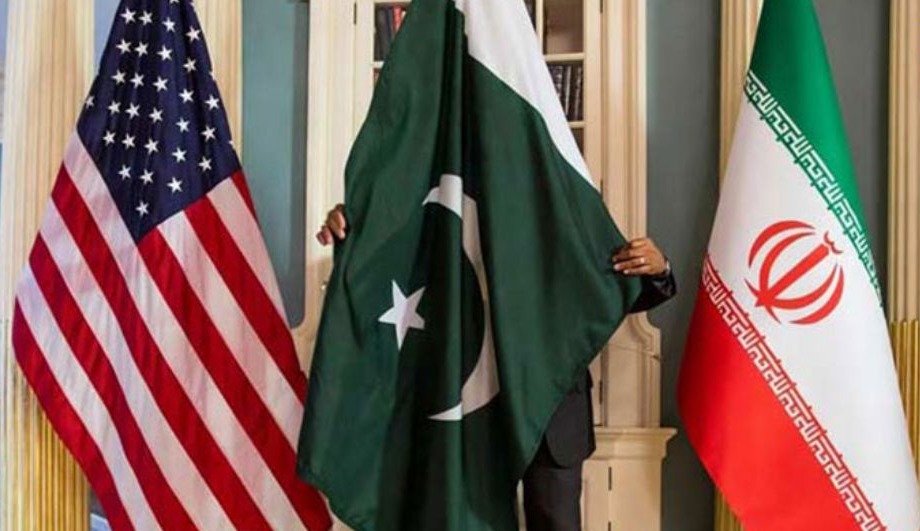
ISLAMABAD (Digital Post) Pakistan is playing a dynamic role in reducing tensions in the region and in seeking a diplomatic solution. Pakistan’s fastest diplomacy is ongoing. Pakistan has contacted the foreign ministers of many countries. Pakistan is ready to become the “center of peace” in the Iran-US conflict.
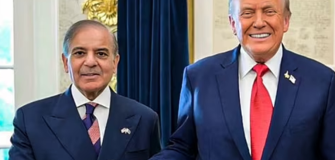
Prime Minister Shehbaz Sharif has stated that Pakistan is prepared to engage in meaningful talks to resolve the ongoing crisis. Hosting the talks, with the consent of the US and Iran, is a matter of pride for Pakistan.
The Prime Minister said that negotiations are necessary for peace and stability in the region and around the world. Pakistan welcomes the ongoing efforts of negotiations to end the war in the Middle East and is ready to host meaningful talks for a comprehensive settlement of the conflict, and considers it an honor for itself.

It may be recalled that Pakistani Prime Minister Shahbaz Sharif had spoken to Iranian President Masoud Peshmerga on Sunday over the phone and had called for an immediate reduction in tensions and resolving differences through dialogue and diplomacy with neighboring countries. Shahbaz Sharif had assured the Iranian leadership that Pakistan would continue to play a constructive role in establishing peace in the region.
It has been reported in the media that US Vice President JD Vance, Wittkoff, and Jared Kushner will likely represent Iran at the talks to be held in Islamabad next week. On the other hand, a spokesperson for the Pakistani Foreign Office said in this regard that Pakistan is ready to host mediation if the parties agree. The Foreign Office Spokesperson has confirmed that Pakistan is ready to host talks between Iran and the US if they agree. Pakistan is currently being seen as a strong candidate to become a “center of peace” in the Iran-US conflict. Field Marshal Asim Munir’s recent telephonic conversation with US President Donald Trump is being considered important in paving the way for talks. The talks are likely to begin in Islamabad, but are yet to be confirmed by Washington or Tehran. It may be recalled that this new development came to light on the international diplomatic channel when Pakistan’s Foreign Minister Ishaq Dar contacted the foreign ministers of Turkey, Iraq, Egypt, the UAE, and Iran in this context. According to the details released by the Foreign Office Spokesperson, Deputy Prime Minister/Foreign Minister Senator Muhammad Ishaq Dar today had a telephonic conversation with Deputy Prime Minister/Foreign Minister of Iraq Fawad Hussain, during which the current regional situation was discussed. The two leaders expressed deep concern over the ongoing regional tensions and their wider implications. Deputy Prime Minister/Foreign Minister Ishaq Dar stressed the need for collective efforts to de-escalate tensions and prevent further instability, stressing that dialogue and adherence to international law are essential to ensure peace, security, and stability in the region and beyond.
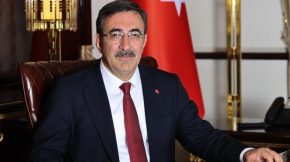
Meanwhile, Deputy Prime Minister/Foreign Minister Senator Muhammad Ishaq Dar discussed the evolving regional situation with Turkish Foreign Minister Hakan Fidan. The two leaders reviewed the latest developments in the region, including the US President’s announcement of a temporary ceasefire.
Foreign Minister Senator Ishaq Dar stressed the importance of continuing diplomatic engagement to ensure peace and stability in the region and beyond. They agreed to remain in close contact on the evolving situation.
Furthermore, Deputy Prime Minister/Foreign Minister Ishaq Dar spoke on the phone with Iranian Foreign Minister Abbas Araqchi. They discussed recent regional developments, with Ishaq Dar emphasizing the importance of dialogue and diplomacy to promote peace, security, and stability in the region and beyond. The two sides agreed to remain in close contact on the evolving situation.
In addition, Deputy Prime Minister/Foreign Minister Ishaq Dar spoke to Deputy Prime Minister/Foreign Minister of the United Arab Emirates Sheikh Zayed. They discussed the evolving regional situation. Ishaq Dar stressed the importance of peace and stability, called for immediate de-escalation of tensions, and stressed that dialogue and diplomacy are the only viable way forward. He also expressed deep sorrow over the loss of precious lives, including three Pakistani citizens, and reiterated Pakistan’s strong solidarity with the UAE. The two leaders agreed to remain in close contact.
Furthermore, Pakistan, in line with its long-standing policy, is committed to resolving the ongoing conflicts in the Middle East/Persian Gulf through diplomatic channels and engagements.

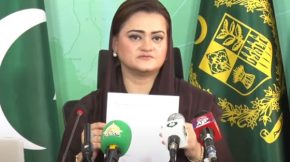
The spokesperson of the Foreign Office of Pakistan has said that diplomacy and negotiations often require that certain matters be taken forward with discretion. The media is encouraged to refrain from speculation and wait for official announcements about decisions and outcomes.
It may be recalled that the US President had claimed that the US and Iran had held ‘very positive, productive and constructive talks’ to de-escalate tensions. However, the Iranian Foreign Ministry denied the talks between Tehran and Washington.
Meanwhile, an Iranian diplomat aware of the possible talks between Iran and the US has said that there are possibilities that Islamabad could be the host venue if a decision is made regarding the talks. We are waiting for details from our Foreign Ministry.The United States and Israel have been claiming for weeks that Iran’s military capabilities have been completely weakened. US President Donald Trump and his Defense Secretary, Pat Hegseth, have repeatedly said that the repeated attacks have crippled Iran’s command structure and weakened its ability to respond. According to them, the conflict should now be coming to an end. But the situation seems to be the opposite. Tensions are moving faster, with greater intensity and with fewer clear endpoints. It emerged that Iran had fired two missiles towards the US-British base of Diego Garcia in the Indian Ocean, a distance of about 3,800 kilometers. Although the missiles did not reach the island, the incident raised new concerns about Iran’s capabilities. Until now, Iran’s missile range was thought to be about 2,000 kilometers. Whether this is a previously hidden capability or has been developed during the repeated attacks, the implication is that military pressure has not stopped Iran’s progress. Much of its top leadership has indeed been eliminated, including Supreme Leader Ali Khamenei, senior leaders like Ali Larijani, the commander of the Revolutionary Guards, the chief of staff of the armed forces, and key missile development centers. So the question arises: who is leading this campaign and how is Iran maintaining its capabilities despite intense pressure? The uncertainty starts at the top. Mojtaba Khamenei reportedly survived the attack that killed his father and close family members. He was named the new leader. But he has not yet appeared in public. Apart from two written messages, nothing has been heard or seen from him. His current condition is unclear, nor is it clear whether he is capable of leading. In a system that is based on centralized authority, this silence is creating uncertainty at the very center of power. Iran’s actions are by no means a sign of decline. Iran also attacked the Israeli city of Dimona in the Negev Desert, an area believed to be linked to Israel’s undeclared nuclear program. The attack followed Israeli strikes on energy infrastructure near Bushehr, Iran’s nuclear power plant. The message was clear: if tensions escalate, there will be a response, and key sites will no longer be safe. These moves signal coordination rather than chaos. The basic idea of American and Israeli strategy was that removing the top leadership would paralyze the system, but that now seems uncertain. The concept of the military strategy, known as “shock and awe,” relies on the immediate collapse of decision-making structures. But what if these structures turn out to be stronger than expected? If so, a more immediate problem arises: with whom to talk? Iranian President Masoud Peshmerga has kept himself low-profile. In the early stages of the conflict, he apologized to neighboring countries that had been affected by the Iranian attacks, a move that is said to have angered some sections of the Revolutionary Guards. Since coming to power, Khamenei has become increasingly quiet, further limiting diplomatic channels. From Tehran’s perspective, recent events provide little reason to believe in any kind of talks. In the past 14 months, two separate diplomatic series since Trump returned to office have shown signs of progress toward a nuclear deal. But each time they have been followed by military action. Iranian officials say they have overcome most of the US’s concerns at a second round of talks in Geneva on February 27. Preparations for technical talks were underway in Vienna. But Trump said he was “not happy” with the way the talks were going, and the attacks began the next day. The message for Iranian decision-makers is clear: talks do not prevent attacks, they may even invite them. But it is not just Iran that could escalate the conflict. Trump also escalated the situation on Saturday night. He issued a 48-hour ultimatum demanding that Iran reopen the Strait of Hormuz. He warned that if Iran did not comply, the United States would “destroy” Iranian power plants. Iran rejected the demand and responded with a similar threat that any attack on energy infrastructure would be met with attacks across the region. Iran’s Supreme Defense Council also mentioned the possibility of laying mines in parts of the Persian Gulf. The exchange underscores the dangers ahead. Trump is rapidly moving down a path of diminishing options. Without ground forces, the United States and Israel are limited to air strikes, which can inflict damage but not necessarily achieve complete surrender. At the same time, such attacks could provoke a wider response, while Hormuz itself would not reopen. The war of words seemed to be moving both sides directly into a more dangerous phase. But just hours before his own deadline, Trump backed down. In a post on Truth Social, he said he had had “very good and productive” talks with Iran and announced a five-day moratorium on any attacks on Iranian energy infrastructure. Time is of the essence. This move, made just before the ultimatum, provides a possible escape, at least for now.The market reaction was cautious. Oil prices fell slightly, a sign of modest satisfaction but not excessive complacency. The announcement remains to be tested in practice, and it is unclear how long the pause will last or whether it truly signals progress toward negotiations. The fundamental question remains: who is really doing the talking in Iran and who has authority over the IRGC and security forces, who appear to be operating under a “fire at will” policy? If this situation persists and Hormuz remains contested, both sides could return to their threats, with dire consequences.
 Some 170 million people across the region, more than 90 million of whom are in Iran, could face severe disruptions to electricity and other essential services. With limited avenues for dialogue, President Trump’s options are also shrinking. Further escalation could turn into a cycle of destruction that offers little strategic advantage, leaving only extreme measures on the table. The situation is also difficult for Iran. The country entered the conflict under the shadow of economic pressure and widespread unrest. For now, the war has eased some of that pressure, allowing authorities to tighten internal controls. This creates a delicate balance. For Iran, escalating tensions is a way to respond to external threats and contain internal unrest. But it also increases the chances of a costly mistake. Both sides are now limited in their options. Iran cannot easily back down because doing so would give the impression of weakness, while the United States and Israel cannot achieve a decisive result through air power alone. Iran has fired missiles at the town of Dimona, near Israeli nuclear facilities, but the International Atomic Energy Agency (IAEA) has said it has received no reports of damage to the nuclear research center. It should be noted that the town of Dimona, which was the target of the attack, is located about 13 kilometers from the Israeli nuclear facility. According to Iranian state TV, the attack was carried out in response to an alleged Israeli attack on Iran’s Natanz nuclear facility. According to the International Atomic Energy Agency (IAEA), there has been no increase in radiation levels in the area after the incident. Rafael Grossi, Director General of the International Energy Agency, has said that the parties should avoid attacks near nuclear facilities. According to the Israeli ambulance service, they have provided medical facilities to 40 injured people after the attack in Dimona, of whom 37 have minor injuries, while the condition of a 10-year-old boy is critical. The Israeli emergency service statement added that 68 people are being treated after another Iranian missile attack in the nearby town of Arad, of whom 47 have minor injuries, while the condition of 10 is critical. According to emergency medical technician Yakir Talekar, “This is a very disturbing scene. Several people were injured, with varying degrees of injury. Israeli authorities are now investigating how the missiles managed to evade air defense systems. Israeli firefighters say that interceptors were launched in Dimona and Arad to intercept the missiles, but they failed to stop them, resulting in the ballistic missiles carrying warheads weighing hundreds of kilograms falling here. Israel’s Shimon Peres Negev Research Center is located in Israel’s Negev Desert and is commonly referred to as the Dimona Reactor. It has long been believed that Israel has stored its nuclear weapons there. Israel has never officially announced that it has conducted nuclear tests, but it is considered an “undeclared” nuclear power (meaning it possesses nuclear weapons but has never officially declared them). Israel’s official position is that the center is purely for research purposes. But for six decades, it has been an open secret to the world that Israel has developed nuclear bombs there. All previous Israeli governments have maintained that it is only a research facility. This means that Israel is the only nuclear power in the Middle East, and any attempt to target its nuclear facilities is taken very seriously (in Israel). The main objective of the war waged by the US and Israel against Iran is to completely eliminate Iran’s ability to build a nuclear bomb. Iran’s own Atomic Energy Organization (AEOI) called the attack on Natanz a violation of the Non-Proliferation Treaty and said that there was no evidence of radioactive material being released there and that there was no threat to the surrounding population. Iran’s nuclear site Natanz was also targeted in the early days of the recent war that began on February 28, while the US also bombed it in June last year at the end of the 12-day Iran-Israel war. Israel’s official policy on nuclear weapons is called ‘Omnipotence’ or ‘deliberate ambiguity’. That is, Israel neither confirms nor denies possessing such weapons. Shimon Peres, who served as Prime Minister and President of Israel, wrote about this in his memoirs: ‘We have learned that ambiguity has extraordinary power… Doubt was a powerful deterrent to those who dreamed of a second Holocaust.’Meanwhile, German President Frank-Walter Steinmeier has said that relations with traditional ally the United States have become deeply rift and that the US-Israeli war against Iran is a violation of international law. Just as it was not possible to back down from Russia’s invasion of Ukraine in 2022, “we cannot go back to the situation before January 20, 2025,” when President Donald Trump returns to the White House for the second time. “The rift is very deep and trust in American power politics has disappeared around the world,” he said on the occasion of the 75th anniversary of the German Foreign Ministry. Although Steinmeier’s role is largely ceremonial, his words carry weight in Germany, which has not officially condemned the war on Iran. “Our foreign policy is not made more effective if we do not call violations of international law violations of international law,” said German President Frank-Walter Steinmeier, a former foreign minister. The US and Israeli war on Iran is, in my opinion, a violation of international law and is not acceptable.In this case, the argument that an immediate attack on the US is justified is unacceptable.