
Islamabad (Digital Post) Operation Radd-ul-Fatah-1: Elimination of Terrorist Network in Balochistan Pakistan Army and security institutions have successfully completed Operation Radd-ul-Fatah-1 in Balochistan

Islamabad (Digital Post):The Pakistan Army and security institutions have successfully completed Operation Radd-ul-Fatah-1 in Balochistan, under which targeted, swift and intelligence-based operations were carried out against Indian-backed terrorist elements. These terrorists were conspiring to disrupt peace and development in Balochistan by targeting innocent civilians, especially women and children. According to research by senior analyst Asghar Ali Mubarak, the operation began on 29 January 2026 in the outskirts of Panjgur and Harnai, after credible and verified intelligence reported the presence of terrorist elements posing an immediate threat to local residents.
Field Marshal Syed Asim Munir, Chief of Army Staff and Chief of Defence Force, visited Quetta, where he was given a comprehensive briefing on the overall security situation in Balochistan and internal security operations. According to ISPR, the briefing covered recent terrorist attacks, the role of the Indian-backed, internationally designated terrorist organization Fitna-e-Hindustan, and the timely and aggressive response of the security forces. The briefing stated that the actions of the security forces thwarted attempts to undermine peace, stability and development in Balochistan.
During the visit, detailed discussions were also held on measures to further strengthen the writ of the state and ensure the protection of the public and critical installations. Field Marshal Asim Munir made it clear that no terrorist or facilitator would be spared and strict action would be taken in accordance with the law. He said that violence and terrorism cannot be justified under any pretext. The Army Chief praised the professional competence, bravery and sacrifices of officers and personnel of all law-enforcement agencies for foiling the nefarious designs of enemy elements.
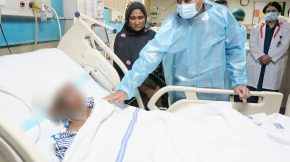
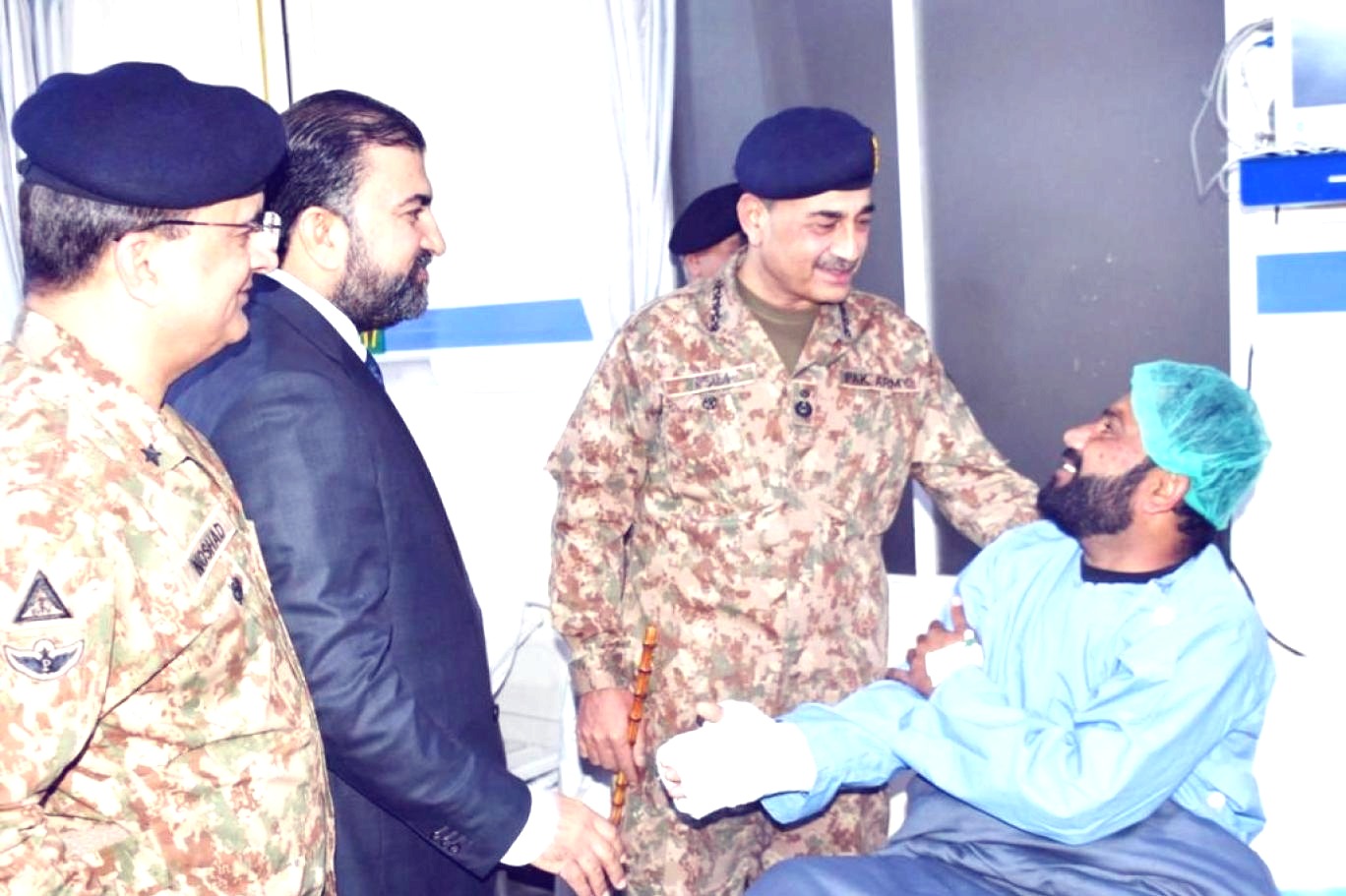
Later, Field Marshal Syed Asim Munir, along with the Chief Minister of Balochistan, visited Combined Military Hospital Quetta, where he met injured personnel of the Pakistan Army, FC Balochistan and Police. He appreciated the high morale of the injured soldiers and paid tribute to their courage and steadfastness in the defence of the motherland.
At this stage, operations were conducted against terrorist hideouts, resulting in the killing of 41 terrorists linked to Indian proxy networks. Subsequently, Pakistani security forces continued swift and targeted operations to foil state-hostile attacks by terrorists. Continuous clearance and intelligence-based operations were carried out in several areas to dismantle terrorist sleeper cells.
During Operation Radd-ul-Fatah-1, the Pakistan Army, law-enforcement agencies and intelligence agencies conducted operations with mutual coordination and planning. As a result of this organized campaign, 216 terrorists were killed, dealing a severe blow to the leadership, command and control, and operational capability of terrorist networks.
During the operation, foreign weapons, ammunition, explosives and other materials were also recovered, the initial analysis of which indicates that the terrorists were receiving financial, technical and logistical support from external sources. Unfortunately, during the operation, 36 innocent civilians, including women and children, were martyred, while 22 brave security personnel laid down their lives for Pakistan’s territorial integrity and the protection of citizens. ISPR termed these sacrifices a reflection of the Pakistan Army’s high professional standards, resolve and traditions of service, and expressed complete solidarity with the families of the martyrs.
The Pakistan Armed Forces clarified that operations to eliminate terrorism will continue under the Government of Pakistan’s National Action Plan, and security operations will continue until the complete elimination of terrorist threats.
Operation Radd-ul-Fatah-1 is a manifestation of the peace-loving nature, unity and progressiveness of the people of Balochistan and Pakistan, proving that the nation always prefers peace over violence, unity over discord, and development over destruction.
President Asif Ali Zardari paid tribute to the Pakistan Army, security forces and law-enforcement agencies on the successful completion of Operation Radd-ul-Fatah-1 in Balochistan. He said that the timely and effective actions of the security forces foiled the malicious attempt by Fitna-e-Hindustan to sabotage peace in Balochistan. The President paid homage to the innocent civilians and brave security personnel martyred during the operation and expressed condolences to their families. He said the nation salutes the sacrifices of its martyrs and is united against terrorism. President Zardari stated that the complete elimination of externally backed terrorism is the top priority of the government and the state, and expressed satisfaction that intelligence-based coordinated actions have severely damaged the leadership and operational capability of terrorist networks.
Prime Minister Muhammad Shehbaz Sharif also paid glowing tribute to the leadership, officers and soldiers of the Pakistan Armed Forces on the successful completion of Operation Radd-ul-Fatah carried out by security forces to crush the nefarious designs of Fitna-e-Hindustan to destabilize peace in Balochistan. The Prime Minister praised the high professional skills, courage and resolve of the security forces for breaking the backbone of terrorist command and sending a total of 216 terrorists to hell. He expressed deep sorrow and grief over the martyrdom of 36 individuals, including women and children, and paid rich tribute to 22 security personnel who sacrificed their lives in defence of the homeland, saying that the Pakistani nation can never forget the sacrifices of its martyrs. He said that cowardly terrorists have proven themselves enemies of Balochistan’s development, prosperity and people by targeting innocent civilians, and made it clear that the war against this menace will continue with full force until terrorism is completely eliminated. The Prime Minister reaffirmed that the entire nation stands shoulder to shoulder with the Pakistan Armed Forces for the defence of the homeland and that every attempt to undermine peace in Balochistan will continue to be thwarted.
Federal Interior Minister Mohsin Naqvi also paid tribute to the Pakistan Army and security forces on the success of Operation Radd-ul-Fatah-1 in Balochistan, stating that security forces deserve salutations for sending 216 terrorists of Fitna-e-Hindustan to hell. He praised the professional capabilities, determination and morale of the security forces and said their bravery and effective actions thwarted the conspiracy to create unrest in Balochistan. He made it clear that the fate of Fitna-e-Hindustan terrorists is a disgraceful death and that the leadership and operational capability of the terrorist network has been severely damaged. The Interior Minister paid homage to the martyred security personnel and innocent civilians, saying that the martyrs are our pride and their sacrifices will always be remembered.
Chief Minister Balochistan Sarfaraz Bugti said that if this were a political issue, it could have been resolved through dialogue, but this matter is not political and needs to be understood. He stated that after the Constitution of Pakistan, the National Action Plan is the most important document. Terrorism in Balochistan is not due to deprivation, while the issue of missing persons is used to justify violence. Terrorists use human shields whenever they carry out attacks in cities. The issue of missing persons is used to justify violence; it is not limited to Balochistan, as Khyber Pakhtunkhwa also faces this issue, but more noise is made about Balochistan. He said terrorists have no more than 2 to 3 percent public support in Balochistan, and their total number would not exceed 4 to 5 thousand. Due to the operation, the intensity of recent terrorist attacks has decreased. He added that terrorism incidents increased due to reconciliation policies, and before 2018 the state’s policy was not one of reconciliation. Sarfaraz Bugti urged international media to call terrorists terrorists and said there was consensus between political and military leadership on the National Action Plan.
He stated that 31 civilians and 17 security personnel were martyred, while the number of terrorists was not even 200 at most.
Speaking in the National Assembly, Defence Minister Khawaja Asif said that due to Balochistan’s specific geographical conditions, the deployment of a large number of troops is essential. There will be no negotiations with terrorists; they will be responded to with full force. He said the government has taken strict measures to curb smuggling, resulting in major protests at the Chaman border, where protesters demanded negotiations with nationalist movements. He clarified that these people are neither genuine politicians nor nationalists; rather, their movement is primarily driven by compensation for business losses and earning billions daily through oil smuggling. He added that criminal elements operating under the name of BLA provide protection to these smugglers, and that there is collusion among tribal elders, bureaucracy and separatist movements in Balochistan. He said that in recent days 177 terrorists were killed, while 17 security personnel and 33 civilians were martyred. He assured the House that there would be no talks with terrorists in Balochistan and that the state will respond with full force to those who martyr women, children and security forces. He said all politicians must unite against terrorists; political rivalries may continue, but unity against terrorism is essential. He alleged that blackmailing has been used to halt development in Balochistan and that the sardari system prevented the province from progressing. He said that some time ago he obtained missing persons data ranging between 700 and 750. Balochistan is a vast area that is extremely difficult to control, and militants there possess advanced weapons that sometimes even security forces lack, raising the question of where such weapons are coming from. He added that today Balochistan has 15,096 schools, 13 cadet colleges, and 13 major hospitals, yet a narrative of deprivation is still created. Balochistan’s NFC share is Rs 933 billion.
Significant progress has emerged from ongoing counter-terrorism operations by security forces in Balochistan. According to available data, during recent operations 177 terrorists were killed, while 17 security personnel (10 police, 6 FC and 1 Levies) were martyred. Additionally, 33 civilian deaths were reported in Gwadar and Makran.
Balochistan is Pakistan’s largest province, covering 347,190 square kilometres (44 percent of Pakistan’s total area), with a population of approximately 14.8 million, accounting for 6.1 percent of the country’s total population. The province’s total budget is Rs 1,028 billion.
The roots of unrest in Balochistan date back to the 1950s, when influential tribal chiefs began patronizing smuggling mafias to protect their personal interests. These mafias are involved in narcotics, illegal Iranian oil and reverse smuggling of Afghan transit trade. Since the 1960s, a corridor system for transporting essential goods has existed and has been misused for smuggling. State initiatives in education, health and employment go against the interests of these elements, leading to strong opposition to development projects. The BLA and other banned organizations are considered armed wings of these criminal elements.
The government’s zero-tolerance policy against smuggling has severely impacted their interests; for example, Iranian diesel smuggling has dropped from 20 million litres per day to just 1 million litres per day, sufficient for local needs. Terrorists and their facilitators follow a dual strategy: on one hand they attempt to weaken the writ of the state through terrorist attacks, and on the other they use youth, writers and liberal circles to form an anti-state narrative. Security sources say that India and Afghanistan openly provide diplomatic and non-diplomatic support to these elements.
Balochistan has a diverse population comprising 40 percent Baloch, 30 percent Pashtun, 17 percent Brahui, and others including Hazaras and settlers. A larger Baloch population resides in southern Punjab and northern Sindh, disproving the “Free Balochistan” narrative. Development since 1947 also negates claims of deprivation. The Foreign Office has already maintained that India uses terrorism as a policy in the region and continues efforts to destabilize Balochistan. After recent attacks, Islamabad has once again urged the international community to take notice of Indian activities.
The deadly terrorist attack in Balochistan on 30 January and the release of the Indian Netflix film “Dharandhar” on the same day have raised new questions. Experts say it is difficult to view these events separately, as they convey a specific psychological and political message, while also stressing the need for impartial international investigations. Security circles say the coincidence cannot be termed accidental, especially when Pakistan has already accused India of backing terrorism in Balochistan. Officials say banned organizations operating in Balochistan have external patronage, and past evidence has indicated links to Indian intelligence networks. The aim of these attacks, according to security sources, is to destabilize Pakistan and damage economic and strategic projects.
Interestingly, on the same day as the attacks, the Netflix film “Dharandhar,” reportedly centred on violence, covert operations and aggressive narratives, was released in India. In Pakistan, social media and political circles have rejected the timing as a coincidence. India has previously used films, media and digital platforms to promote its narrative and exert psychological pressure. The simultaneous release of such content with sensitive security incidents raises questions, particularly when Pakistan has repeatedly presented evidence of Indian interference at global forums.
Pakistan has made it clear that it will not compromise on its security and will continue to expose all elements behind terrorism, whether internal or external. According to ISPR, security forces thwarted attacks by Indian-backed Fitna-e-Hindustan terrorists in various areas of Balochistan, killing 92 terrorists, including three suicide bombers, while a total of 133 terrorists were eliminated. During these operations, 15 security personnel were martyred. It was stated that terrorists were targeting innocent civilians, women, children, elderly people and labourers, spreading fear and panic.
During a National Assembly session, leaders from various political parties jointly condemned terrorism in Balochistan and expressed unity and a firm stance against it. PTI Chairman Barrister Gohar said that targeting Balochistan is equivalent to attacking the whole of Pakistan and that government and opposition are united on this issue. He stressed reviewing and updating the National Action Plan according to current conditions and said it is essential to take provincial governments into confidence in counter-terrorism measures. MQM MNA Asia Ishaq also strongly condemned terrorism in Balochistan and alleged that India is now using cricket as a weapon of war, accusing it of deception under the “Big Three,” while saying Pakistan ended its dominance in May and that the ICC has effectively become the Indian Cricket Council.
JUI-F MNA Shahida Akhtar Ali said that Maulana Fazlur Rehman has repeatedly spoken at every forum about curbing the wave of terrorism, while the ground reality is that people feel unsafe in their areas. Balochistan MNA Jamal Raisani said the ongoing situation in Balochistan is neither a movement nor a struggle for rights, but pure terrorism. He paid tribute to martyred security personnel and Ghazis and acknowledged public sacrifices, while questioning why the National Action Plan is not being discussed. He said the enemy country is talking about breaking Pakistan, while explanatory statements are being issued here. He criticized the Interior Minister, saying he may not be aware of Balochistan’s history, as it is a land of the brave. Jamal Raisani urged breaking chains of hypocrisy and speaking with one voice, stating that the House is not weak and Balochistan will always remain part of Pakistan.
According to a communiqué, an important Provincial Apex Committee meeting was held under the chairmanship of Chief Minister Khyber Pakhtunkhwa Suhail Afridi, attended by provincial ministers, Corps Commander Peshawar, Chief Secretary, IG Police and senior civil, military and law-enforcement officials. The meeting began with prayers for civilians and security personnel martyred in various incidents. The committee reviewed rising terrorism, strategies to eliminate enemy elements and ensure lasting peace and stability. It emphasized that consultation, cooperation and practical coordination among political parties, public representatives, elders and the federal government are essential for the success of a comprehensive counter-terrorism policy.
The Apex Committee clarified that the KP government will use all available resources, including the army, police, CTD and other institutions, to take decisive action against terrorism. The communiqué stated that under a long-term strategy, causes of terrorism will be identified and eliminated and public trust restored to ensure national security and development through joint efforts. The government’s agenda is to unite the nation against terrorism through good governance and public welfare. In the first phase, terrorism-affected areas will be converted into model good-governance districts, with special packages for security, communications, health, education, employment and basic services. The meeting also agreed to ensure complete care, rehabilitation and provision of basic needs for temporarily displaced persons and prioritize their dignified return.
The Chief Minister reiterated that peace is the provincial government’s top priority and no compromise will be made on it. He said that for the establishment of law and order, the civil government, administration, Pakistan Army and law-enforcement agencies are on the same page and that only joint efforts can win this war.
Similarly, in view of rising terrorism in Khyber Pakhtunkhwa, the provincial government announced decisive measures for peace and stability. An important Apex Committee meeting chaired by the Chief Minister expressed resolve that no sacrifice will be spared in the war against terrorism and that political leadership, the federal government, civil administration and security institutions will move forward in complete harmony to ensure sustainable peace in the province.